
Solitaire Wargames – category of boardgames which in the beginning of my tabletop journey was completely alien to me – are becoming more and more important in my overall passion about history. I appreciate all the types we have here: be it the dedicated solo designs, positions with solo variant or simply solo-friendly titles – like with chit-pull mechanics. If I have a multiplayer game which I am going to bring to the table with my friends, I first do a solo run and familiarize with it.
What had a huge impact on and contributed to this situation, was without any doubt the COVID pandemic time – except for occasional Digital or VASSAL/Tabletop Simulator assisted plays, I was back then mainly entertained by moving the chits alone on the map (or using my two sons as great bots 🙂 ).
If you read my blog regularly, you have probably seen that I already created some content on Solo Games be it after action reports, reviews or recommendations. Among them I would like to draw your attention to Solitaire Wargames Series article about which I am definitely very proud.
However, today we shall take different approach. First of all, we shall focus on my top three recent solo titles – which I played in last 12-14 months. Then, look at my my top three all-time favorite solo positions. That way we shall cover all dimensions.
Other articles in the series:
New Solo Designs
Fields of Fire Deluxe Edition from GMT Games
Disclaimer: I admit, I had some doubt whether to put Fields of Fire Deluxe Edition in the “New Designs” or “All-Time Classics” sections. However, due to number of changes which this new print brings – rules presentation wise, graphics wise, counters wise – I decided this can be treated as a new experience.
As for the game itself, I had a pleasure to extensively play Fields of Fire in the past. I am so glad that after many years, thanks to GMT One initiative, we got new, upgraded, revamped deluxe edition which streamlines and fixes issues of its predecessor while leaving all the great mechanics it has.
This is probably the best small units combat simulation ever created, which has fantastic planning phase and unfolds completely differently each time. The replayability value is enormous, the tense combat engaging, and the history it tells – engrossing.

What I also like about it, is that although pretty complicated, with multiple rules, systems, exceptions, etc. this game does not punish you for mistakes – which inevitably will happen. As there is a myriad of things happening, decisions to make, and situations to resolve – it simply creates engaging, interesting and often surprising narrative.
In order to facilitate familiarization with this game, based on the GMT content, I created two sets of materials: How to Play: Platoon Academy & How to Play: Company Academy. Check them out if you are still in doubt whether this game is for you! Highly Recommended!
More about game:
Hispania from Draco Ideas
There are huge & complex solitaire systems – like just mentioned Fields of Fire, but there are also small, neat and elegant titles which require much less effort / time investment while still providing tons of fun and enjoyment.
That is true for Hispania, a game designed by Miguel Marqués and just recently published by Draco Ideas as a part of its crowdfunding campaign. This is a cooperative game in which 1 to 3 players take the role of all the praetors and consuls that Rome sent to Hispania for almost 200 years, until the first emperor Caesar Augustus culminated the conquest with the final defeat of the Cantabrians and the incorporation of Hispania to his brand new Empire.
Honestly, for me that game much better plays solitaire than in cooperative mode as span of decisions is limited and it is better to have them covered and coordinated by one person.
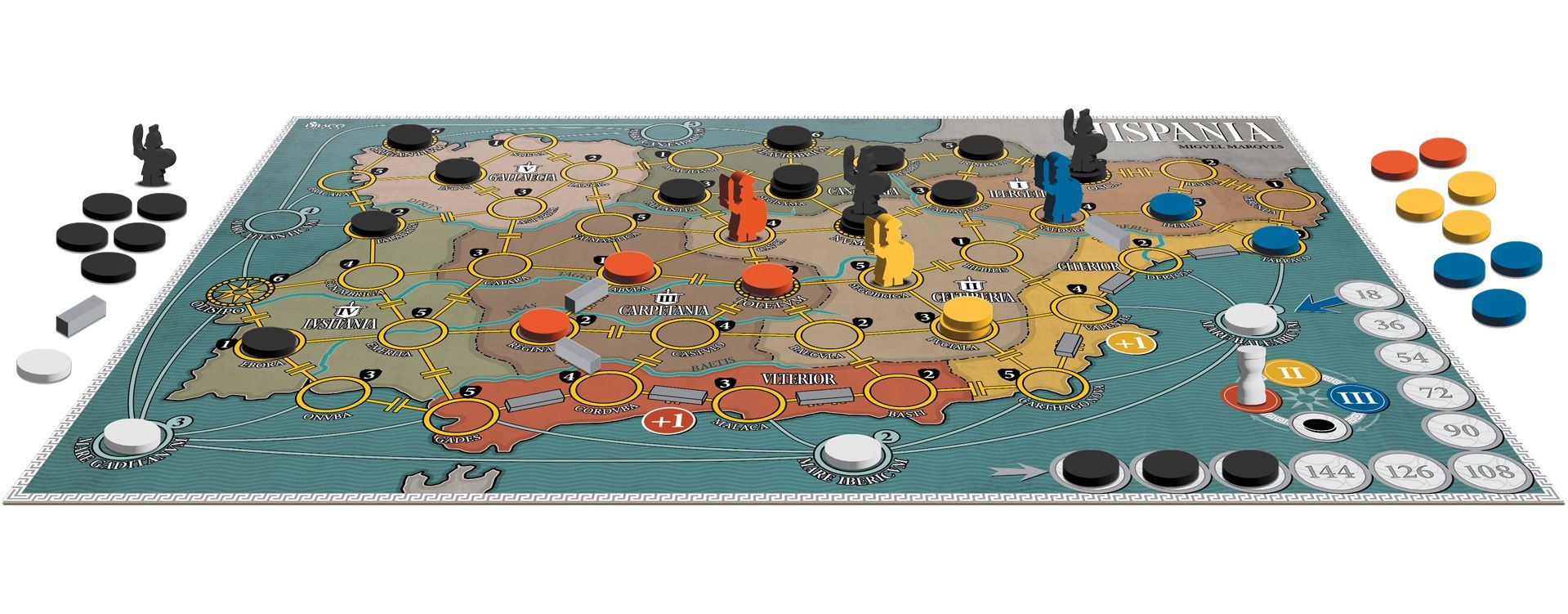
If you played Tetrarchia – and I did and had a lot of fun with it – the game will be familiar to you as the core engine is similar. However, there will be several important changes (like Roman coins and roads) but a similar difficulty matrix that leads in this game to 243 different levels. On top of that, the game includes several modular expansions, historical scenarios, and a competitive mode that allows 1 additional player to lead the Hispanic resistance against Rome.
Yes, this is definitely fun!
More about game:
I, Napoleon from GMT Games

I am really glad to present today also I, Napoleon, a game which I was very curious about! This was especially due to the fact that it it comes from esteemed author, Ted S. Raicer – who designed, among others, one of my all time favorites – Paths of Glory.
This again is a card-assisted title, but with different mechanics and – historical period. I, Napoleon is a solitaire historical role-playing card game in which you step into the boots of Captain Buonaparte (as he still was) in the year 1793. Louis XVI has just gone to the guillotine, the brothers Robespierre control the destiny of France, and all Europe has joined French Royalists to take down France and end the Revolution.
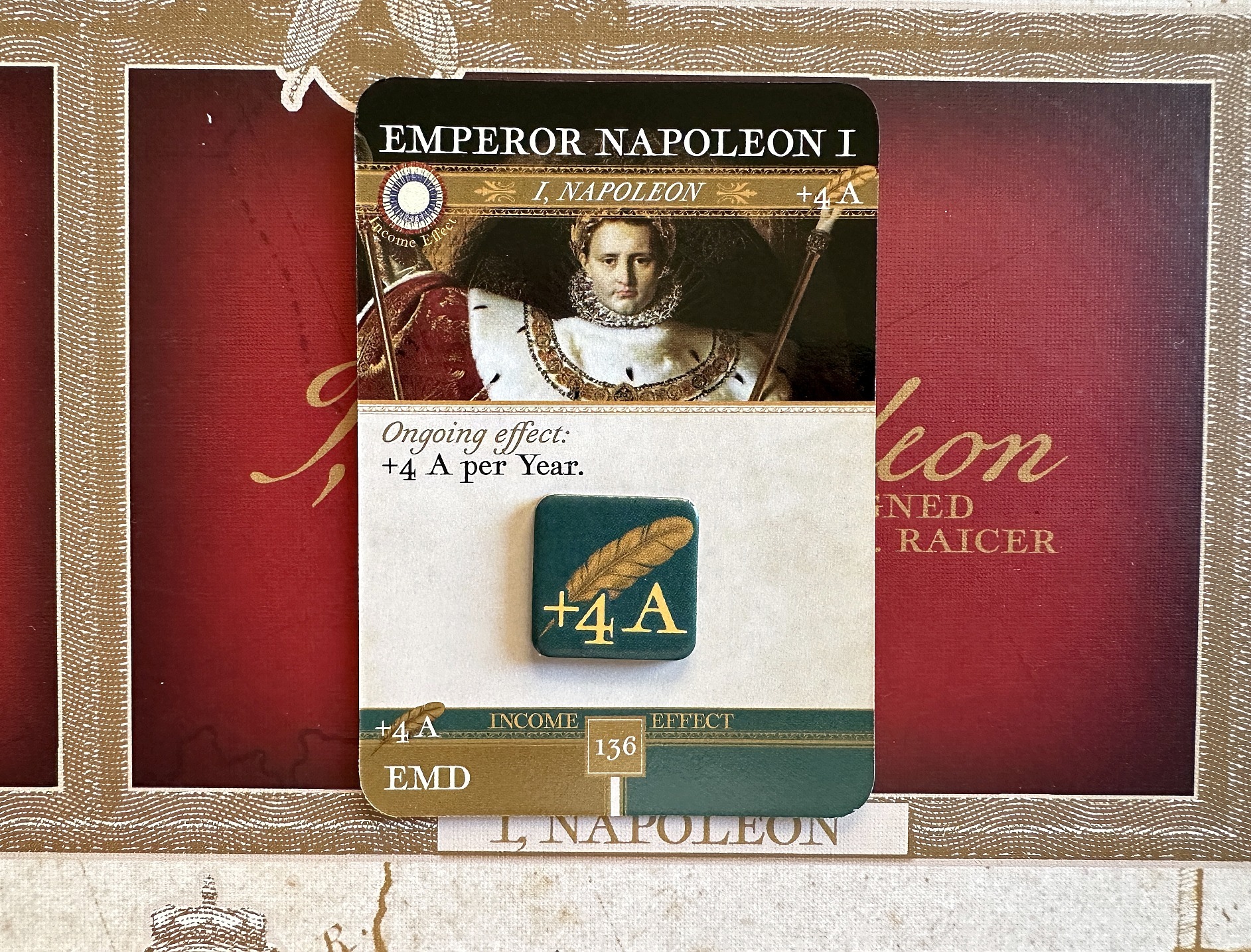
As an ambitious but unknown young artillery officer, who speaks French with a Corsican accent, you would seem to be an unlikely agent of destiny. Can you harness a brilliant mind, titanic energies, and a sometimes terrifying charisma to leave your mark on history? Or will you die a minor footnote in the story of France? This is to be seen!
That solitaire historical role-playing card game is divided into three chapters of the Napoleon life:
- Commander
- Consul
- Emperor
In each of those episodes from Bonaparte life you will have different challenges – whether to gain the political advantages, grab the glory, win a war, avoid execution (!) or produce a heir. Which main axis of events will always be the same, the details will change and that is making each attempt interesting.
More about game:
All-Time Classics
Pavlov’s House by DVG Games
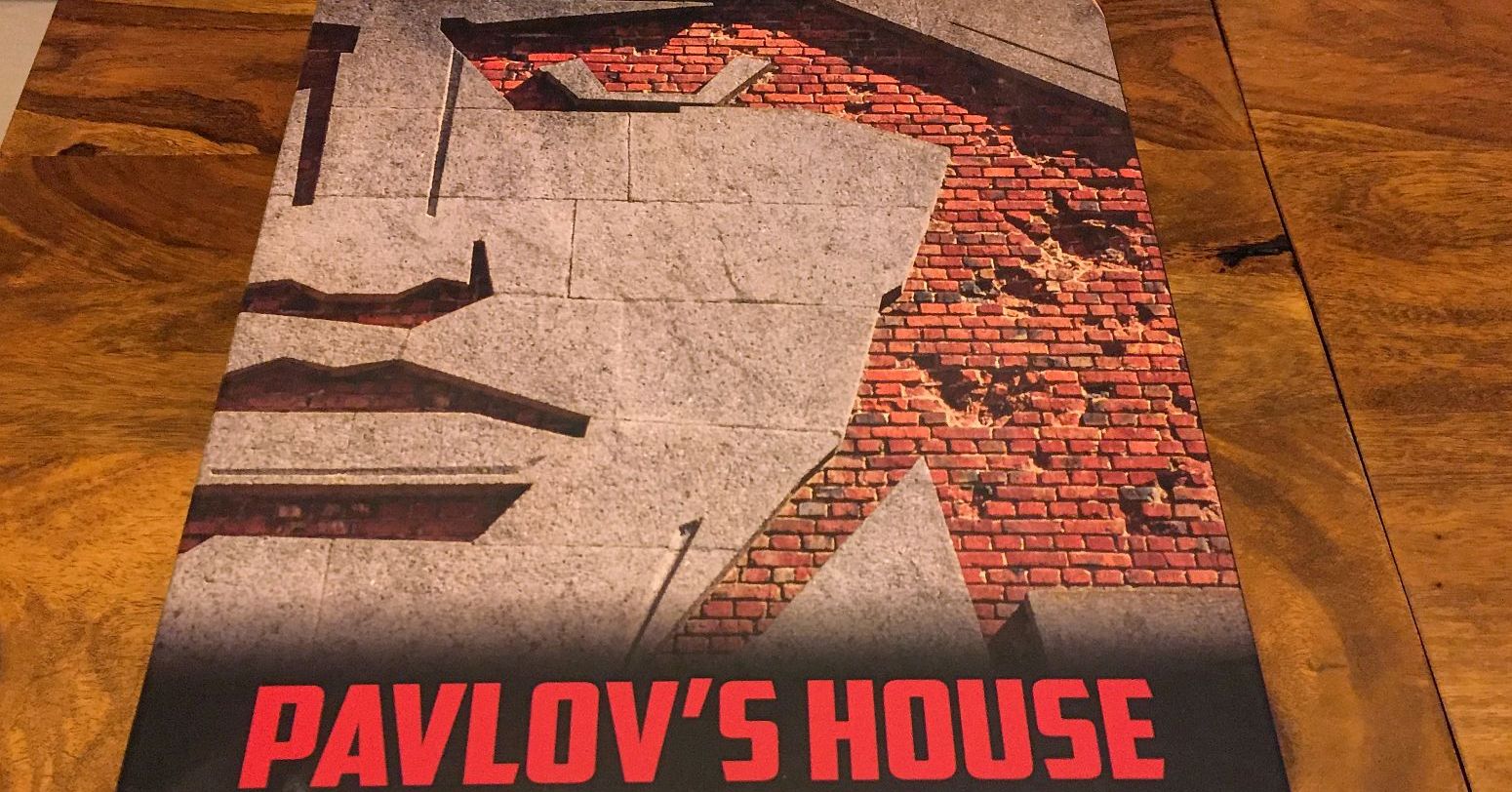
In recent years I started to eagerly discover games by DVG (Dan Verssen Games), with special interest on Valiant Defense series. The first game I got was Pavlov’s House and I immediately started to appreciate how well design it is.
In this title we take control of the brave defenders of a Soviet strongpoint in Stalingrad as they hold out against constant German attacks for almost two months. We also control the key leaders throughout the Soviet 62nd Army that made the defense of Pavlov’s House possible.
The goal in Pavlov’s House is to last through all the German attack waves, inflicting in the process as many casualties on attackers as possible. In the game, this is depicted by playing through a deck of cards representing elements of the German 6th Army.
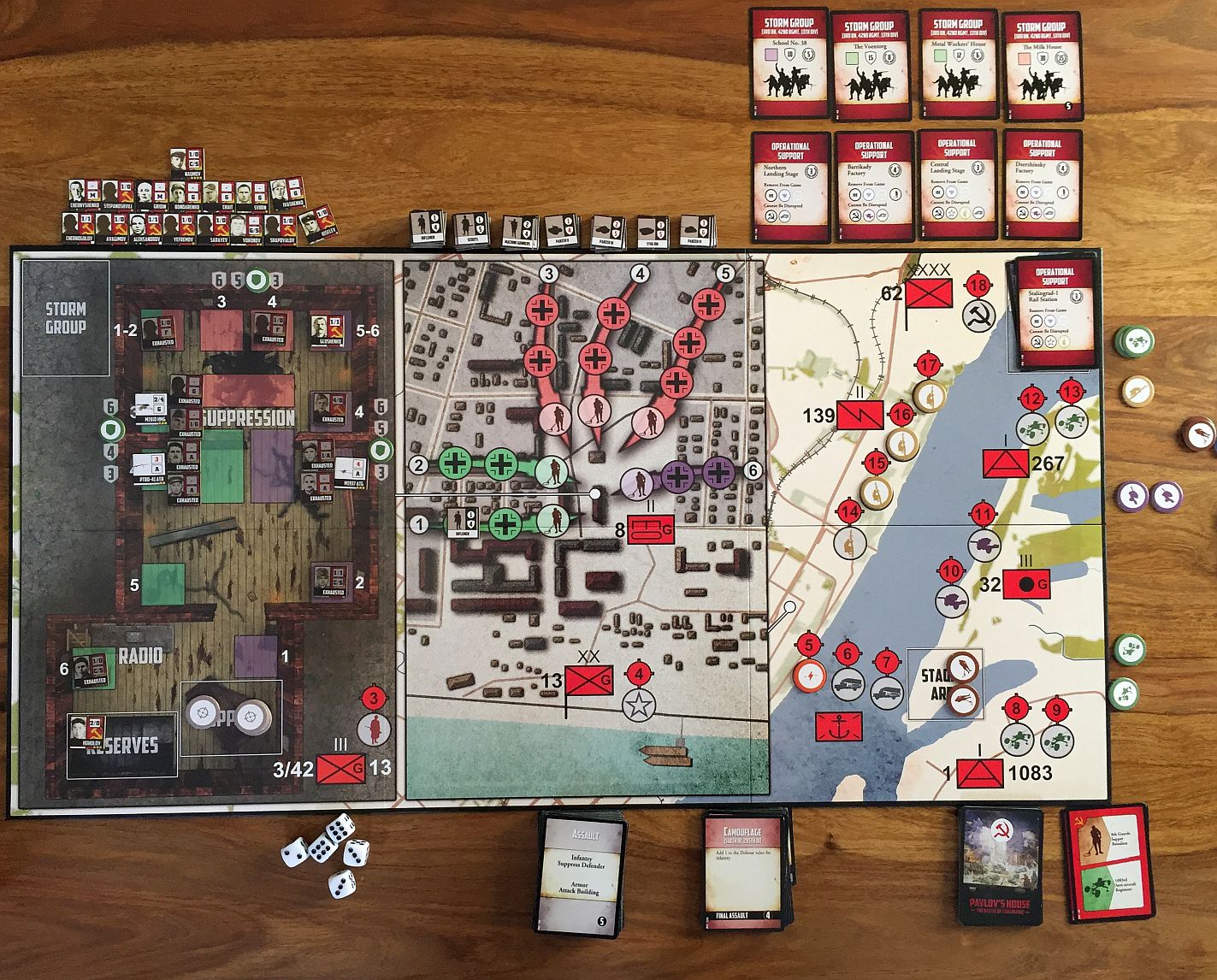
One of the most ingenious design decisions was division of the map in three key sections, each having its own rules as well as cards deck and interacting with others:
- strategic perspective – on the right side of the board is a depiction of the Volga River and operational-level elements of the Soviet 62nd Army, which were critical in the defense of Pavlov’s House.
- tactical perspective – in the middle of the board is a view of the area immediately surrounding Pavlov’s House (primarily, 9 January Square). This portion of the board is used for tracking Wehrmacht Counters, as well as the deployment of Soviet Sappers in the defense of Pavlov’s House.
- operational perspective – on the left side of the board is a view inside of Pavlov’s House. The colored square areas are combat positions used by the Soviet Counters. This portion of the board is used for tactical-level movement of the Soviet Counters.

You may ask why I recommend it? First of all, Pavlov’s House is not an easy game to win. It is brutal & challenging and after each failure you just want to try once again. Secondly, and I would like to stress this – there is limited luck factor. You may smile to hear this – because you roll for many elements in game and draw cards. Still, the number of roll is enough to get the probabilistic results and definitely, there is no situation like “one roll ruins the whole game from the start”.
What I really appreciate and what makes me come-back to that game time and time again are Optional Rules. There are additional modes to play the game, like Operational Support or Tactical Cards. They can really enrich the game as well as make it much harder – your choice
Also, I love fantastic components – the board is thick and shiny, but when you sit next to is there are no reflections from the lights. The counters are solid and all those pictures of Russian soldiers – they simply make the game so real and not a academic exercise. The rulebook is also great as it guides you through all the important game mechanics and is printed on very good paper.

So yes, this is definitely one of my top three in the category of solo games. Highly recommended!
More about game:
D-Day at Tarawa by Decision Games
As you probably can observe from my blog, I am devoted fan of John H. Butterfield creations. I focus on couple of titles like D-Day series or SpaceCorp. All those games are pretty procedural, with clear actions designed for the Artificial Intelligence (Bots). I really like the way cards drive the Competition / Germans / Japanese behaviors – you do not have to look up the possible actions in pretty complicated flowcharts.
Still, be advised that – especially in case of D-Day – you will face enormously difficult task to deal with. Those titles and its scenarios really try to depict the hardships, misfortunes and difficulties of the landings. But believe me, the joy of achieving even smallest successes is great.

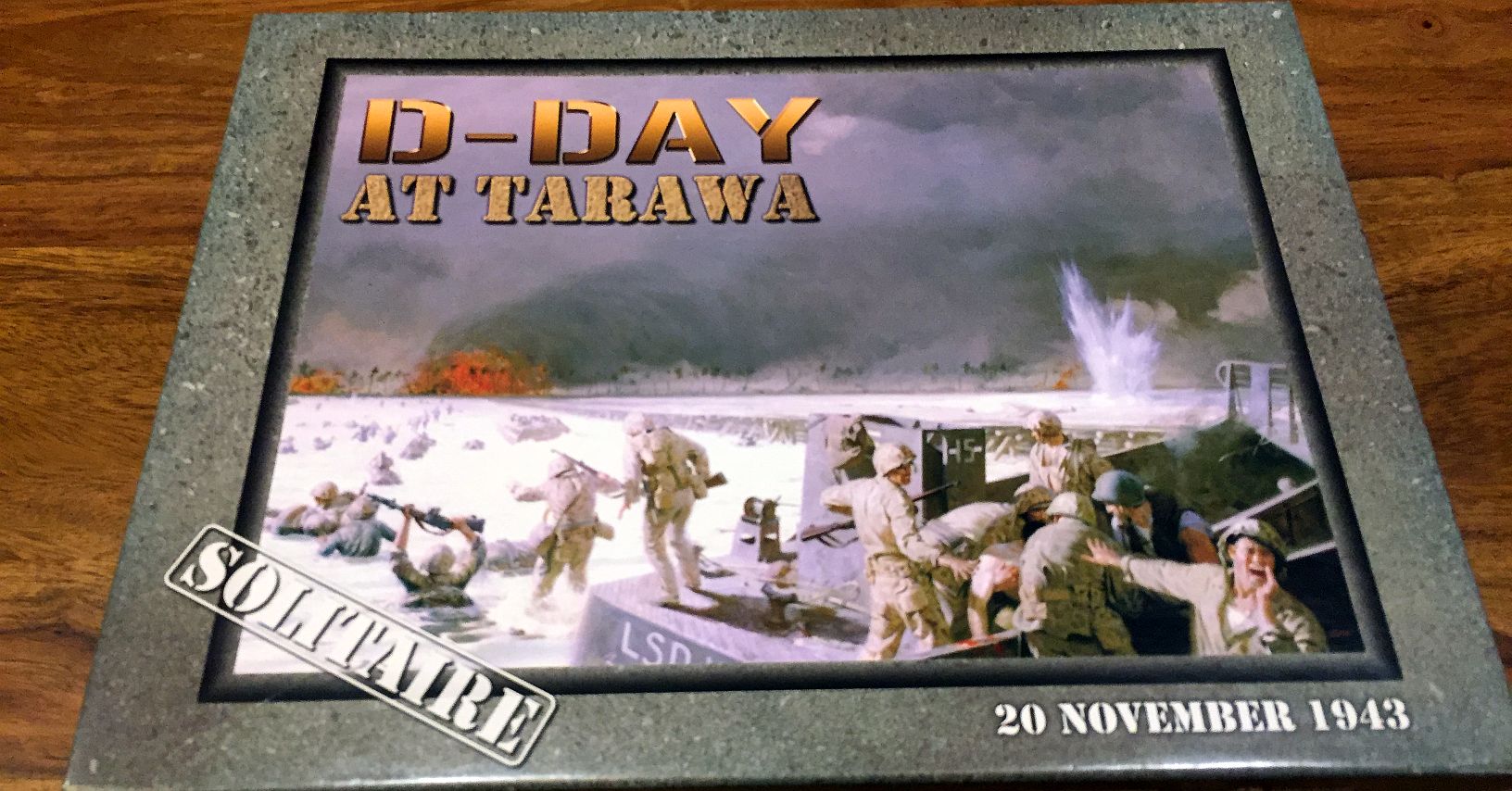
Some more info on game I have chosen for top 3. In D-Day at Tarawa you command the invading American forces against dug-in Japanese defenders, which are controlled by the game system. Tarawa covers the landings on Betio Island in November 1943, and the operations of the US 2nd Marine and 27th Infantry Divisions to clear it — the first heavily contested landing of the Pacific War. The battle for the tiny Island raged for four days and, when it was finally over, fewer than 200 of the 5,000 Japanese defenders remained alive.

Playing D-Dat at Tarawa is very enjoyable experience although do not expect easy wins. The game is tough, you need to be prepared to get a lot of casualties but in the end – once you are more familiar with the map – you see the path and possible axis of attack. The learning curve is painful but satisfaction even greater once you manage to achieve your goals!
What I find especially worth mentioning – and the reason why I put this before Omaha Beach – is Close Combat. This is very brutal but also thematic element of the Pacific Warfare and changes the whole dynamics of the series. Sometimes you even wish to sacrifice some units in order to crack otherwise un-penetrable defenses.

More about game:
- BGG page
- Review
- “The First Waves” scenario
- “The 20 November 1943” scenario
- “The 21 November 1943” scenario
The Mission by White Dog Games
Let me start with more details about the last game I have chosen for the Top 3 of “All-time classics”– I will help myself to great extent with the publisher description. The Mission: Early Christianity from the Crucifixion to the Crusades is a “grand strategy” solitaire game covering 1,200 years of Christian history on a map of the ancient Mediterranean, Near East, Europe and Africa.
While the secular world of empires and politics plays out around you, your missionaries spread the Christian faith and convert areas of the map to your new religion. Each turn covers decades, and the flow of play will teach players about the expansion and doctrinal battles of early Christianity while you build institutions to educate, heal, and inspire the societies you touch.
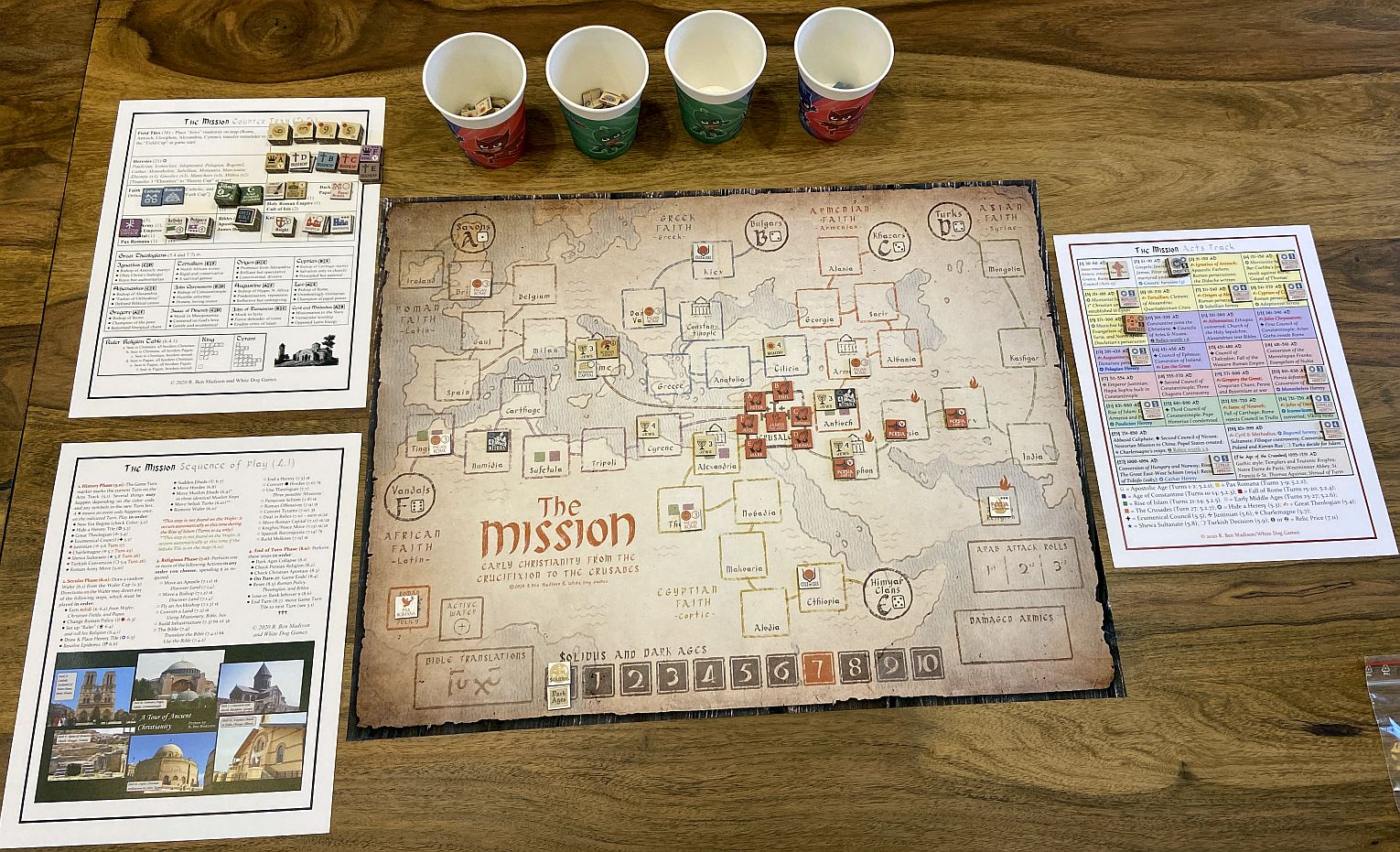
So why I appreciate that game so much? Firth, the theme is very deep in this game. It goes through the narrative, mechanics, components, events. You really have a feeling that you travel in time and witness the onset and then development of Christianity. That really kept me interested through the whole session.
Still, in my opinion, the strongest feature of the game are the various epoch through which the games leads the player – from Apostles times, through Pagan and then Christian Roman empire, barbarians invasions, raise of Jihad and its transformation into Abbasid caliphate. Each of those plays completely differently – initially, you focus purely on faith, but with time the politics start to play more and more important role. The mechanics changes, the challenges too. This is why the game keeps you interested through as much as 27 turns! This is fantastic piece of design!
I will not give the game justice if I will not mention its components – I purchased the folio version due to obvious economic reasons. Still, the quality of tokens, map, rulebook or player’s aids is great and I had really great time with the game as far as visual side is concerned. The enlarged map (now a standard) also helps!

I really like this game – theme, components, epochs, mechanics. I am sure I will be playing more and have already other Ben Madison creations on my radar.
More about game:
Summary
Solitaire wargames are a fantastic addition to our hobby. They give players the freedom to enjoy the games at their own pace, learn all the details without feeling rushed, and serve as a perfect way to pass the time when there are no other players around. Every year, I find myself discovering new titles, and I will definitely share my thoughts on them.
What are some of your favorite solitaire games – both recent releases and all-time classics? Feel free to share in the comments!
 The Boardgames Chronicle
Solo only:
Tarawa 1943
Iwo Jima 1945
Archie’s War
Global War
1942 and Operation Dragoon Solo Travel Games
Multiplayer with Great Solo Bots too:
Freeman’s Farm 1777
Gettysburg: A Time for Heroes
Shores of Tripoli
Churchill
For the People
LikeLiked by 1 person
The above comment was posted by Peter Rich (Soccerref on BGG)
LikeLiked by 1 person
I am glad I played most of those!
LikeLike
You switched the operational and tactical perspectives summary in Pavlov’s House – although if the reader can’t figure that out, they probably don’t belong here.
LikeLike
I tried to buy I, Napoleon in their sale last year, but they were out of stock.
I love Resist! and I have (but haven’t played) Western Front Ace and the various submarine games.
I also love Storm Above the Reich
LikeLiked by 2 people
I hope to see more reports from your Storm games – that was true fun to read them!
LikeLiked by 2 people
Sadly I no longer have space big enough for it. But maybe one day.
I think I was one mission away from running too low on pilots anyway
LikeLike
Wow, that is a pity! Hopefully you will get soem space and continue!
LikeLiked by 1 person
Interesting list. I take note specifically of Pavov’s house and d-day Tarawa 👍. I don’t have a lot of Wargames , i start over after some years (well, 35 😊). Tried and enjoyed Warfighter WWIi Europe, quite fun and have more depth than certain critics say, it’s possible to mitigate the dice fest and decisions can have a sense and consequences.
More serious and without dice is Fields of Fire Deluxe , only learning rules for now. This one, great hopes in it.
Empire Of the Sun (3rd ed.), not perfect but looks promising. (learning rules)
combat! Volume 1, a sort of Ambush, but with more replayability. Reviews are positive but with concerns about the solo AI, a bit chaotic, but i’m sure it can be tamed and improved.
A couple of COINS, and Navajo Wars.
that’s it..
LikeLiked by 1 person
Very nice titles you have there – and you shall enjoy them immensely!
LikeLike
It is hard to leave off, Stalingrad – Advance to the Volga, Western front Ace and Target For today. I might have to try FOF again, but after the first mess, i am finding it hard to make the plunge. Thanks for the post. You do a great job!
LikeLiked by 1 person
Thank you Jerry! I played both Stalingrad and Manila – really like them; still, the podium had only 3 spaces so had to leave off some titles behind 😦
LikeLike
Where are Mike Lambo’s games??
LikeLiked by 1 person
I have already 4 but still need to play them extensively; those seem like pretty straightforward and very interesting.
LikeLike
I need to play Pavlov’s House again!
LikeLiked by 1 person
This never gets boring!
LikeLiked by 1 person