

While I am first and foremost interested in conflict, political and historical types of boardgames, I like to play an economy themed game form time to time. And what would be a better title than one of the famous 18XX’s? I am slowly but steadily familiarizing myself with that genre, starting for example with 18MS (Mississippi) and 18Chesapeake. Now, having two dedicated players – Tomek and Lukasz – we dived into the system even further.
What will follow is a brief set of session reports – played both live and online. This material will focus on two games we brought to the table but I believe our journey will not finish on this.
The 18XX system
But, first things first, couple world about genre. 18xx – this is a series of board games that feature the creation and operation of railroad companies set in the 1800s. Many are named for a particular year that is historically significant to the game or might reflect a geographical region.
The usual play contains two dimensions – stock investments and railroad operations. Players act as investors to found railroad companies, buy and sell stock, and build their investment portfolios in hopes of collecting dividends and benefiting from rising stock values. That stock component is really what in my opinion makes the games unique and interesting. And of course, who will accumulate more wealth at the end of the game, wins!
18Mag
About the game
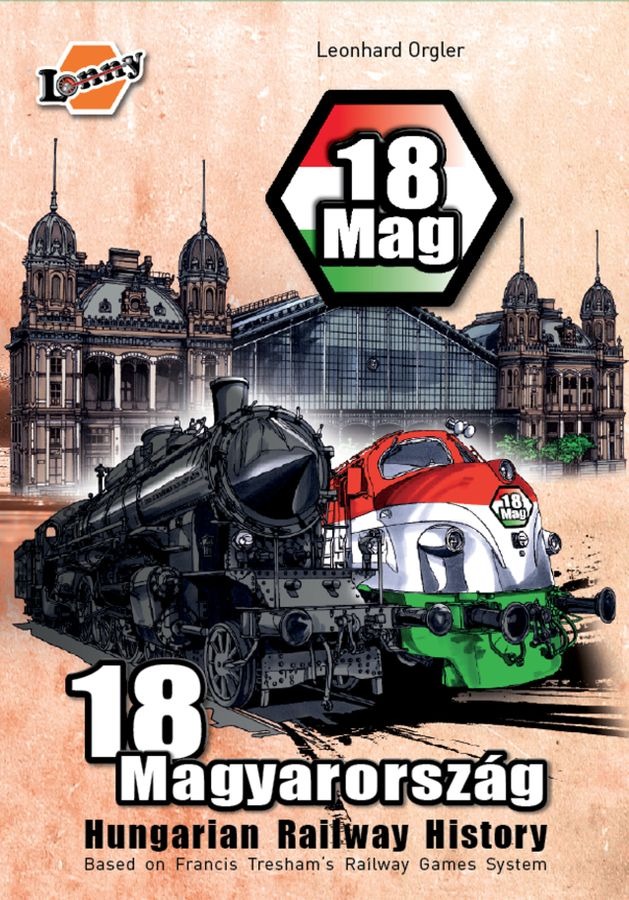
This was first title we decided to play. The 18Mag (Magyarország meaning Hungary) is an 18xx game that tells the story of Hungarian railroads and their supporting companies. Depending on the player number, 13 different railway companies are drafted equally between the players. These railways operate in numerical order, build track on the map, erect stations, run their trains and always pay out their earnings.
Beside those operating railroads, seven other companies offering various services for the railroads are included in the game (so called large / public companies). Examples of these services are building an extra tile, allowance to run freely over small stations, reduce costs when building bridges and tunnels, and most importantly, offer new trains.
Contrary to other 18xx games, all trains are available from the beginning. Because of the pricing, they usually come in the accustomed order, but not necessarily! However, trains do not rust or go obsolete, but they may be scrapped voluntarily to make space for bigger trains.
That game definitely looked as interesting variation of the base system!
Sessions
This was first 18XX game which I had a pleasure to play with Lukasz and Tomek. As you have already seen in description of the title, in this position you run small companies (a lot of them – twelve for three players) while the large ones are operated independently.
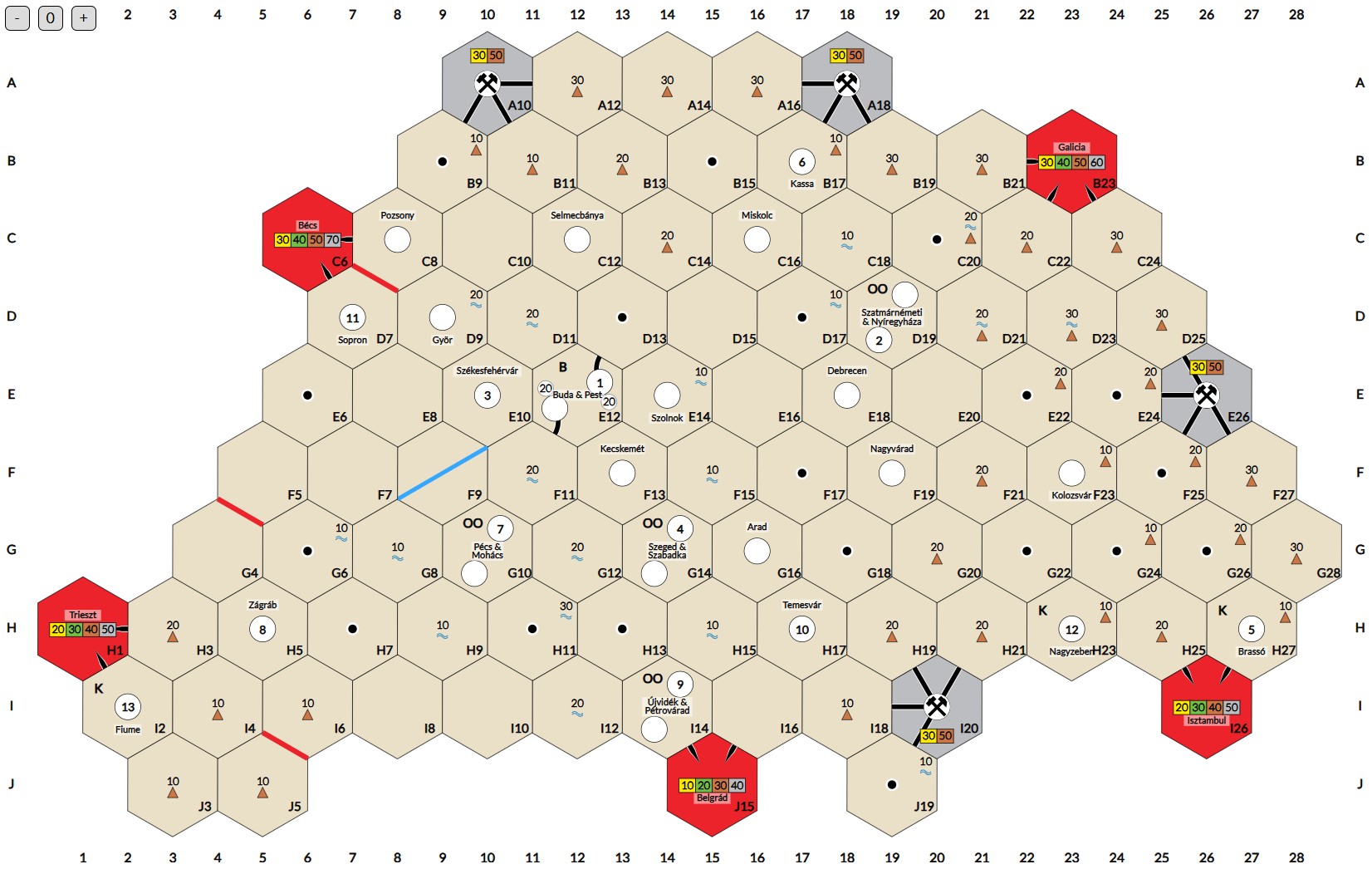
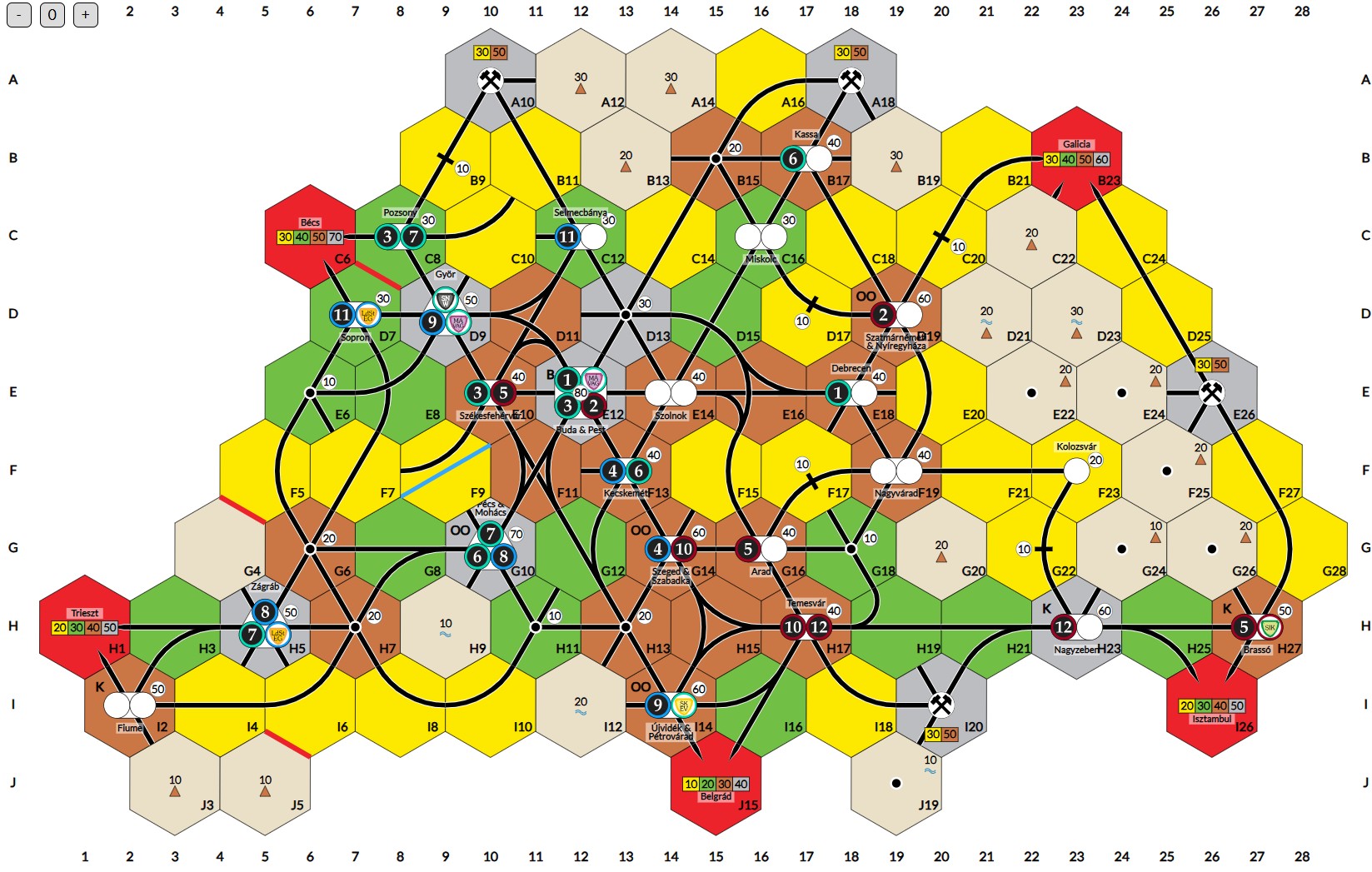
We first played the game face to face (Tomek’s copy), familiarizing with the title, its mechanics and core elements. We did not finish it as the game is pretty long. But hey, there are options to play even the longest 18XX games! This is by wonderful page: https://18xx.games./. I must say I enjoy simplicity and straightforwardness of this tool.

As for the game, we had some good understanding which companies are profitable, how to combine them in combos which support each other. Tomek went for Budapest and neighborhood, I was digging tunnels through Carpathian mountains in the east, while Lukasz was mainly present in southern part.
After initial rounds – when we were just starting the companies – the usual 18XX snowball effect started, with very quick cash and wealth increments each operating round. I like how the page shows the progress of each player from round to round. It seems that our host – and owner of the game – had the best strategy, as Tomek’s Budapest-centric approach gradually was gaining him advantage which he managed to keep till the end of the game. Congrats!
1848 Australia
About the game
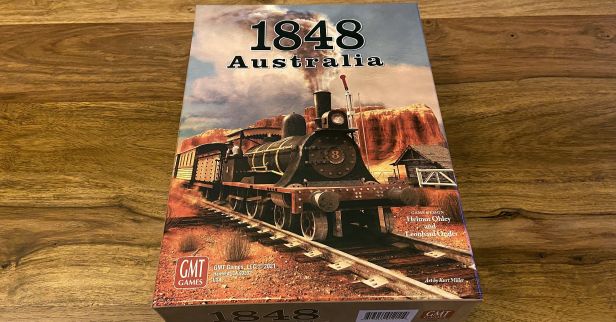
Now, let me tell you more about the next game we played. This position is a semi-historical railroad game from the 18xx set, telling the story of the establishment and development of rail network in – you guess! – Australia.
1848 features an interesting array of differences from the base system. These include how private companies are purchased, the inclusion of The Bank Of England as a public company that extends loans and administers railroads that are in receivership, dealing with different track gauges between states and ‘The Ghan’ special train. You can check more how those work in my Unboxing & Overview as well as How to Play videos.
Sessions
So we played one 18XX game, why not play another! I had chance at two different events to familiarize both Tomek and Lukasz with Australia, playing it face to face. So why not capitalize on that investment, and not use again https://18xx.games./? That is exactly what we did!


You see, Australia is definitely much more cut-throat than 18Mag. The main reason is that you have so called Bank of England which will take over company going bankrupt. And believe me, you really can make sure that your colleague just misses that one train, his company collapse, is being taken owner and he as Director is additionally punished with additional certificate limit.
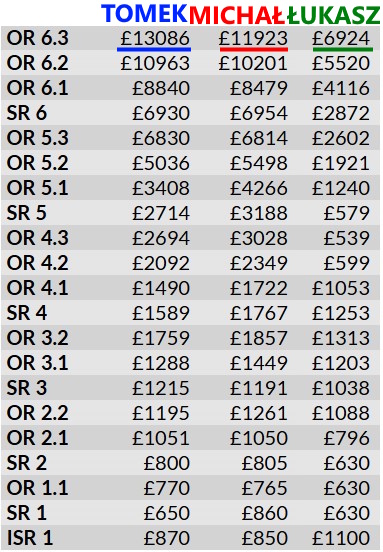
We definitely had such moment in our online game. Everybody survived… almost. The CAR company of Lukasz unfortunately missed the occasion and went into receivership (I love how 18XX games enrich my English vocabulary!)
I was lucky to go successfully through this key moment in game, gain decent advantage and… in the end lose with Tomek as he wisely invested in super efficient trains and easily out-riched me in the end (that made-up word seems pretty accurate here 🙂 ) Next time I will definitely think twice before just hoping for the game to finish earlier. Congrats to Tomek!
Summary
That was several great sessions – both face to face and online – with genre I did not have too much connection with. I think I understand where people see the beauty in 18XX games. The combination of operating element (laying tracks, developing cities) and economical one (shares, takeovers, bankruptcy, market manipulation) makes for a perfect combination. And honestly, who does not love the trains!
 The Boardgames Chronicle