
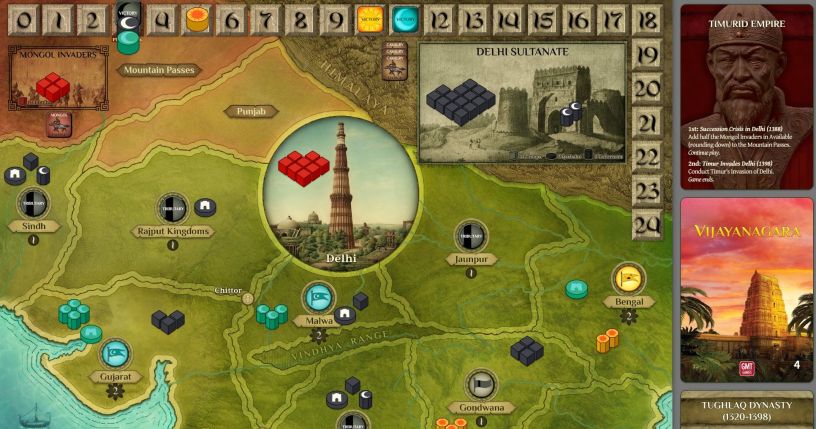
I have played with Clio and Dave already many games on Rally the Troops in various configurations and appreciated the experience greatly. We had fun with Time of Crisis, wrapped our head around with Andean Abyss, planned rebellion in Plantagenet or tried to survive with Friedrich.
However, these are the three-players games which we enjoy and cherish the most. So when we noticed that Vijayanagara is hitting this great platform, it did not take me too long to convince my Dear Friends to try that out. That turned out to be a great decision as we had a lot of fun with it. Let me now do a short AAR of our games! But first , for those not familiar with the platform or game, short intro of them. However, if you would like to jump to the actual report, please jump here.
The Platform

Rally the Troops is an online site where you can play board games in your browser, with fully automated rules enforcement. Play live or asynchronously with friends or strangers, or explore the games on your own. It is free to play, and you do not have to look at any ads – which is impressive.
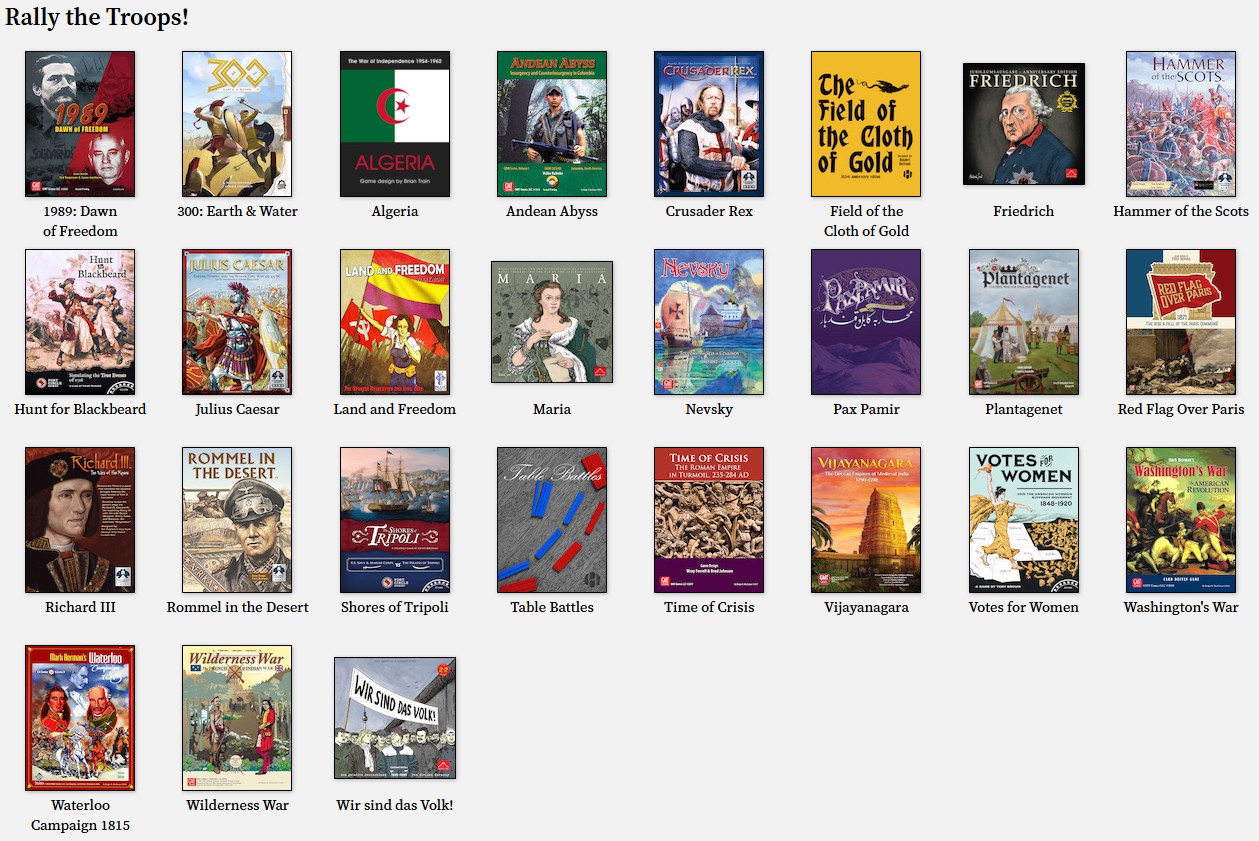
The platform develops and grows all the time. At the moment when I am writing this article, Rally the Troops consist of 27 wargames from various publishers; we have a pretty wide array of the most iconic and prominent designs in our hobby, but you can also find some of the less known. It is rapidly expanding, and we are getting a new position every couple of months – based on the bandwidth of its main developer, Tor Andersson. There is a forum and Discord server where you can discuss the next titles in pipeline, ask the rules questions or simply express your gratitude to the team!
The Game

Vijayanagara is a 1-3 player board game depicting the dynamics of the Indian subcontinent during the years 1290-1398. The game spans the Khalji & Tughlaq dynasties of the Delhi Sultanate, while showing the birth of two upstart powers in the Deccan Plateau, the Bahmani Kingdom and the Vijayanagara Empire. The game closes with the historical invasion of Delhi by Timur in 1398, though a careful Delhi Sultanate player might be able to avoid this fate
The Delhi Sultanate is trying to maintain its grip on the south of India. Its victory points are equal to the total Prosperity of Tributary Provinces, adjusted up or down according to how well Delhi fares against Timur’s final Mongol invasion at the end of the game.
The Bahmani Kingdom and Vijayanagara Empire are both seeking to establish their own independent Control over Provinces dividing the Indian subcontinent, solidify their positions with the construction of Forts (Bahmanis) and Temples (Vijayanagara), and to ensure the propagation of their Influence throughout the Deccan region.
Regular play is also periodically interrupted by the actions of the non-player Mongol Invaders, who threaten Delhi from the northwest, and the game ends with the climactic arrival of the great Mongol warlord Timur.
All of those dynamics make for a great experience, with every faction sometimes on rise and sometimes – in decline. The system of interdependencies helps both to hurt your opponents as well as to come back in case of disasters.
Session Reports
So let us jump now to the actual session reports – in a pretty abbreviated format, with key developments only. The idea was to play three times – so every player can try and test each of the available factions. As I already had one game played, it was me to whom the most difficult to play – Delhi Sultanate – faction fallen in the first place.
Game Set-Up

Let us have a look at the map at the beginning of each Vijayanagara game. It is pretty quiet, all provinces are tributary – not rebelling, there is no Bahmani nor Vijayanagar influence nor forts / temples. But you know what? It will not last that way for too long!
Sultanate starts with 18 VPs, while potentially rebelling forces with zero. The disparity in resources is also huge12 for Sultanate with 6/7 for emerging powers. So the initial strategy is simple – cooperation between Bahmani and Vijayanagara, at least till the time when Rebel command becomes available (after 1/3 of the game). Let us see how it worked!
Session 1
Session 2
Session 3
Summary
Now, let us look at the summary of our plays:
| Clio | Dave | Michal | |
|---|---|---|---|
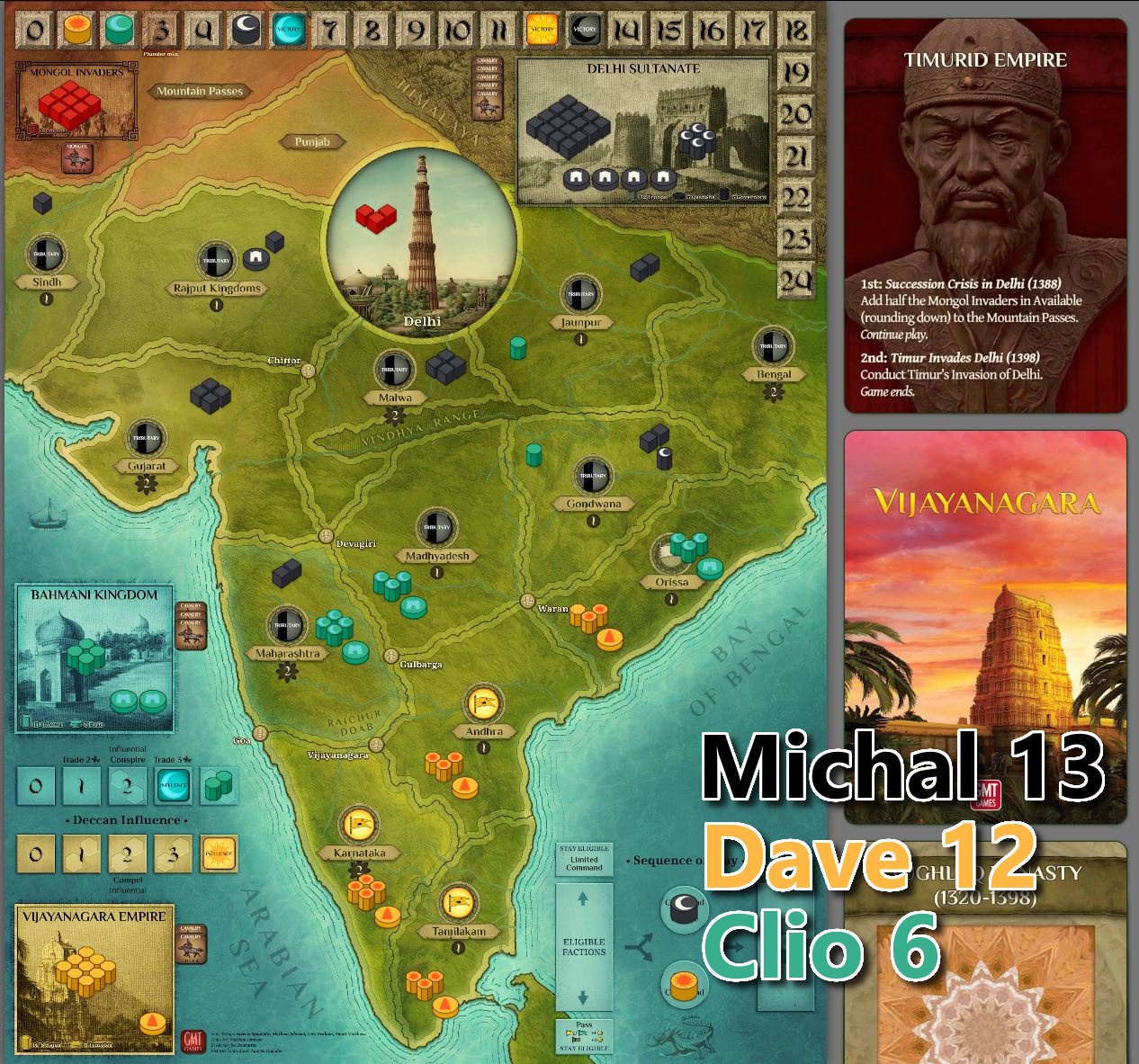
| Session 1 | 6 | 12 | 13 |
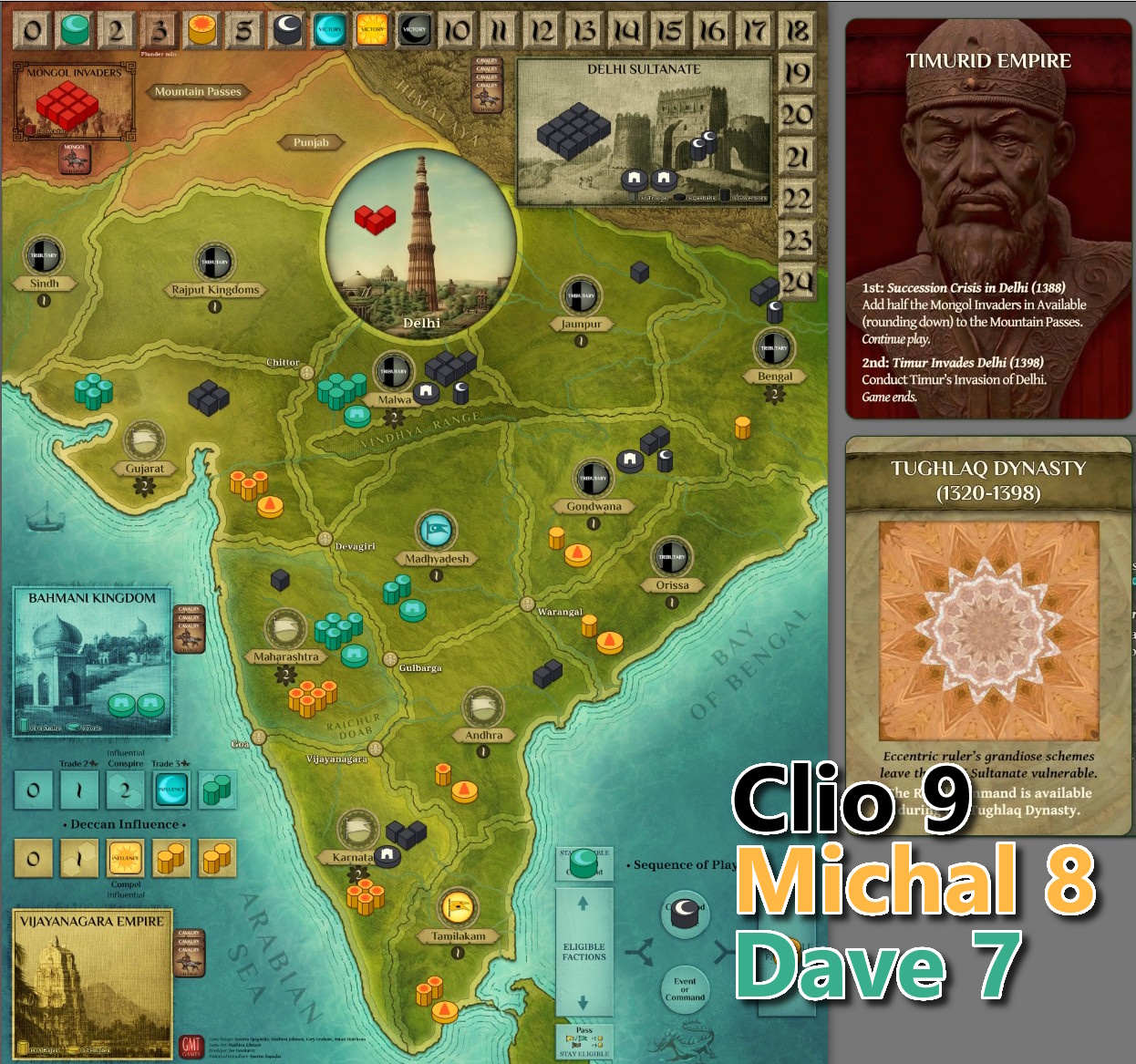
| Session 2 | 9 | 7 | 8 |
| Session 3 | 10 | 3 | 11 |
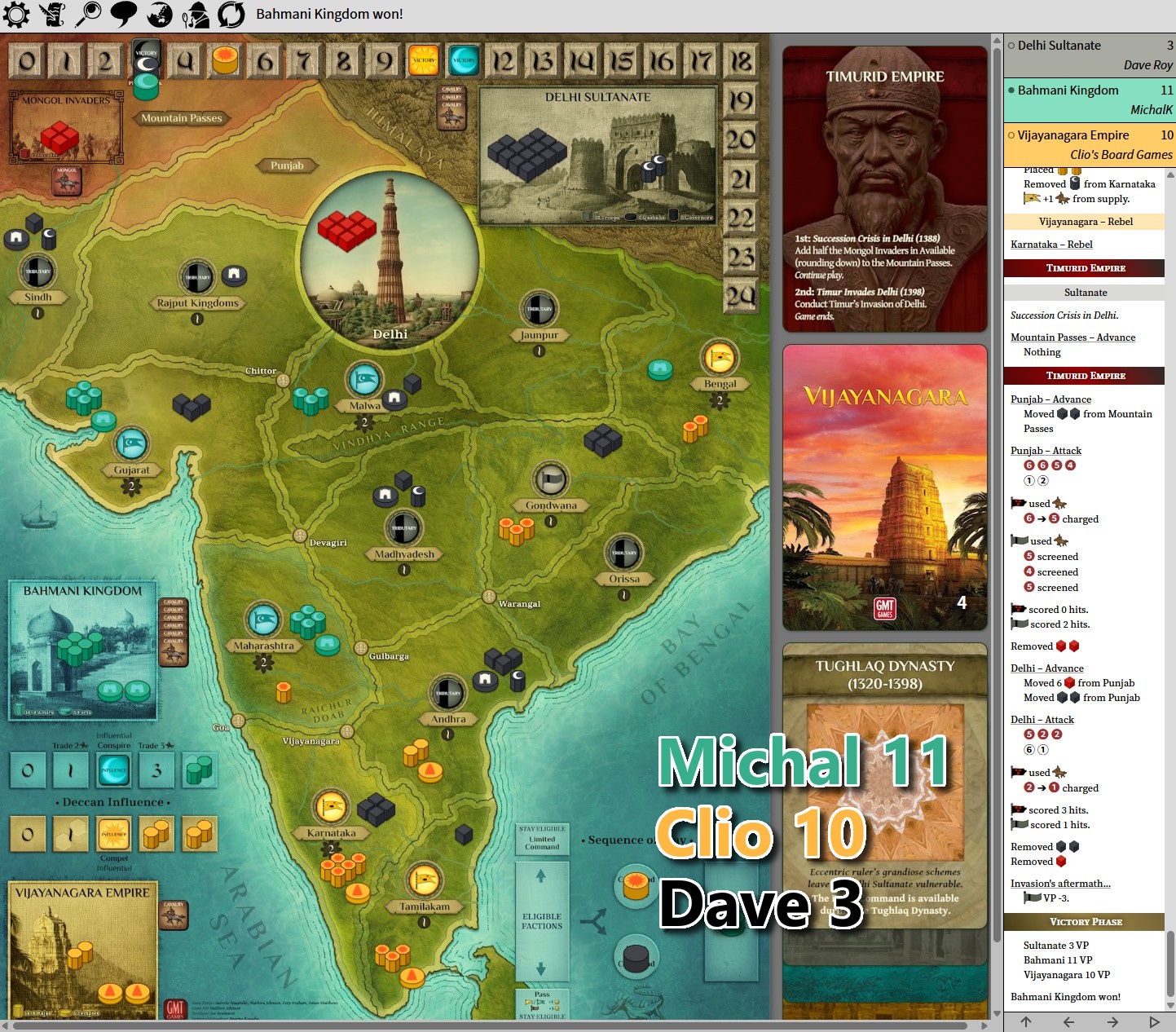
Let me share several of my observations. First of all, interestingly, Sultanate – the most difficult faction to lead – won two times! That is truly some feat to achieve. Than, the game – and it is my experience not only here, but in general – is very close. Each and every victory was by one point! Also, if you look at our second game, it was enormously balanced with just 2 points spread between first and third place.
Conclusion
Playing Vijayanagara is always a blast for me. Playing with great group of friends transforms this into the unforgettable experience! I really appreciate this title – rarely ever we are getting such a balanced, beautiful, historically interesting three-player game. Perfect introduction into the COIN (COunter INsurgency) system as well as lesson in India subcontinent history. Highly Recommended!
 The Boardgames Chronicle
This is such an amazing game. I’m really enjoying it.
Unlike a lot of COIN games (for me), I’m actually “getting” it to the point where I feel like I know somewhat what I’m doing.
I may not execute it well (especially as the Sultanate, obviously!), but when I suck, I know why I sucked.
Our later games with a different opponent, I actually almost pulled out a Sultanate victory, so that made me happy (and I actually did win a game!)
Thanks for organizing these games. They’ve been a lot of fun.
LikeLiked by 2 people
I agree with your evaluation of how accessible this game is. Somehow it all makes sense, the density and amount of rules is just right. And it is such a beautiful product!
LikeLiked by 2 people
That post brought back great memories! We should totally play this again 🙂
Interesting to see the score comparison over the three games – overall, the faction which scored the most VPs (Vijayanagara) never won, coming up second in all games! Goes to show that playing well is not enough in this game, you also need to time your big lunge right so that you are in first place just when the game ends.
LikeLiked by 2 people
That lunge I believe is crucial – and might be risky of course! Very interesting observation regarding our yellow faction!
Ps. Will set up another game with random roles; definitely wish to play more!
LikeLiked by 1 person