
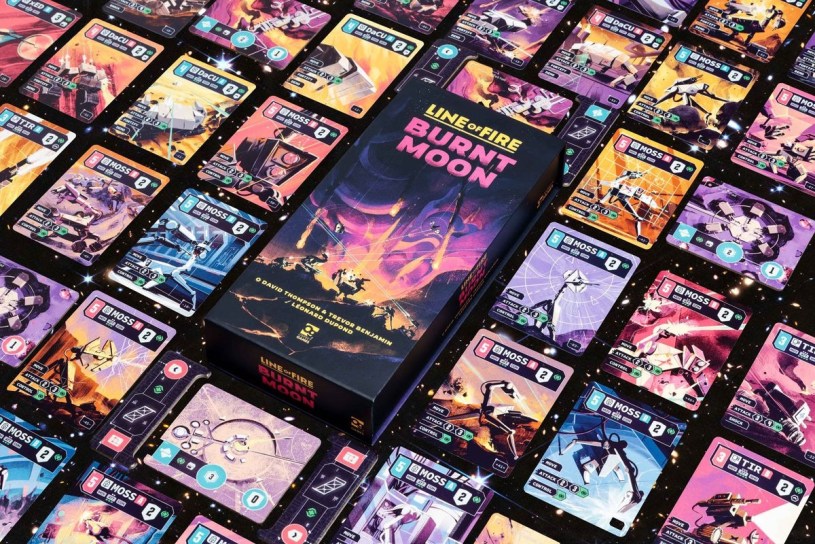
To immediately jump to the Game Page follow the below link:
Michal: Hi David and welcome back to The Boardgames Chronicle blog! For those who do not know you, can you please tell us what do you do for a living, what games do you play? Also, what is your role in the design and publication of the Line of Fire: Burnt Moon?
David: Thanks, Michal — always great to be here. For my day job I’m an intelligence officer with the US Department of Defense. Game design for me is essentially both a part-time job and my primary hobby. I focus primarily on historical and thematic strategy games. I play a wide range of games, though I especially enjoy historical games (usually, but not often wargames) and area control/area influence games. To give an idea of what I enjoy, some of my favorites are Maria, A Few Acres of Snow, and El Grande, Votes for Women, and Land & Freedom.
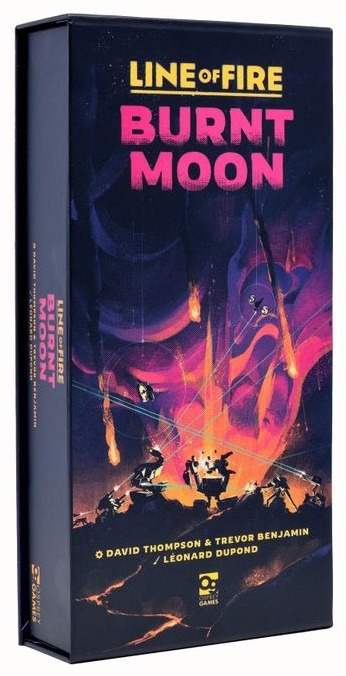
For Line of Fire: Burnt Moon, Trevor Benjamin and I co-designed the game. We developed the concept, built the core system, and refined the gameplay through extensive iteration. Osprey Games, our longtime publishing partner, handled development and production. It’s very much a collaborative process, but the core design came from the two of us.
Michal: Now, as for the game, what inspired the design of Line of Fire: Burnt Moon?
David: The original idea for Line of Fire came during a meeting with Osprey back in 2021. At the time, we were working on Undaunted: Stalingrad and talking early concepts for Battle of Britain. But Trevor and I had this side idea — what if we distilled Undaunted into something quicker, leaner, more immediate?
We wanted to create a low-footprint, card-only experience that still captured the tension and tactical choices that define Undaunted. No dice, no board — just fast, clean lane-based combat driven by tight deck-building. Think of it as the core DNA of Undaunted combined with Up Front and Schotten Totten (Battle Line). That seed became Line of Fire: Burnt Moon.
Michal: What are the key components of the game?
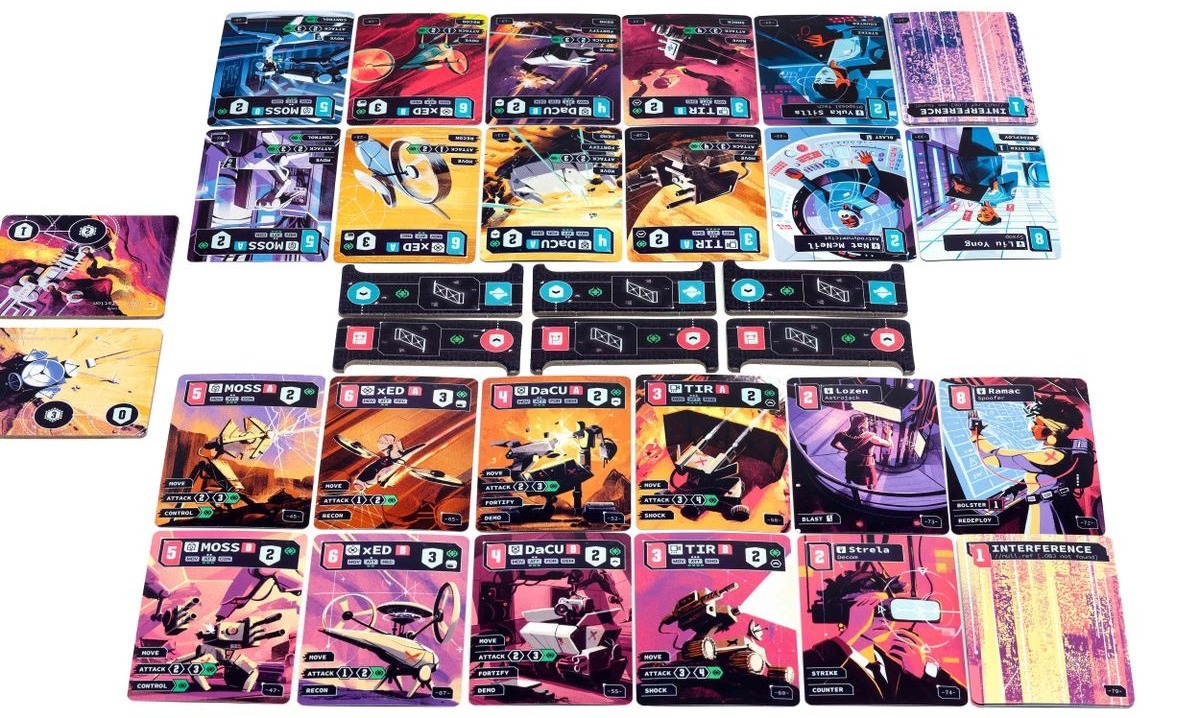
David: The game is compact, but there’s a lot going on under the hood. You get:
- 81 cards, split across two asymmetrical factions. Each card has tactical significance—no filler.
- 10 terrain tiles and 6 fortification tiles that form the modular battlefield across five lanes.
- 4 player aids to streamline gameplay.
- Two booklets: the Gameplay Manual, which explains structure and flow, and the Action Manual, which details units and abilities.
It’s everything you need to start a high-stakes ROV battle in about 30 minutes.
Michal: Can you elaborate a little about game mechanics? Especially in context of the standard Undaunted series deck-building mechanics?
David: Line of Fire shares the deck-building DNA of Undaunted, but it’s reengineered for speed and clarity. Each faction starts with a custom deck and adds cards through gameplay. Like Undaunted, the cards represent units—affecting both the tempo and health of the units on the board.
But there are also key differences. The combat here is deterministic—no dice. You’re playing cards into five contested lanes, pushing ROVs forward, attacking and shocking (suppressing) your enemies, and building fortifications. Every action is about controlling space and outmaneuvering your opponent.
We wanted a knife fight in a phone booth — tactical depth with almost no overhead.
Michal: How do both sides determine victory?
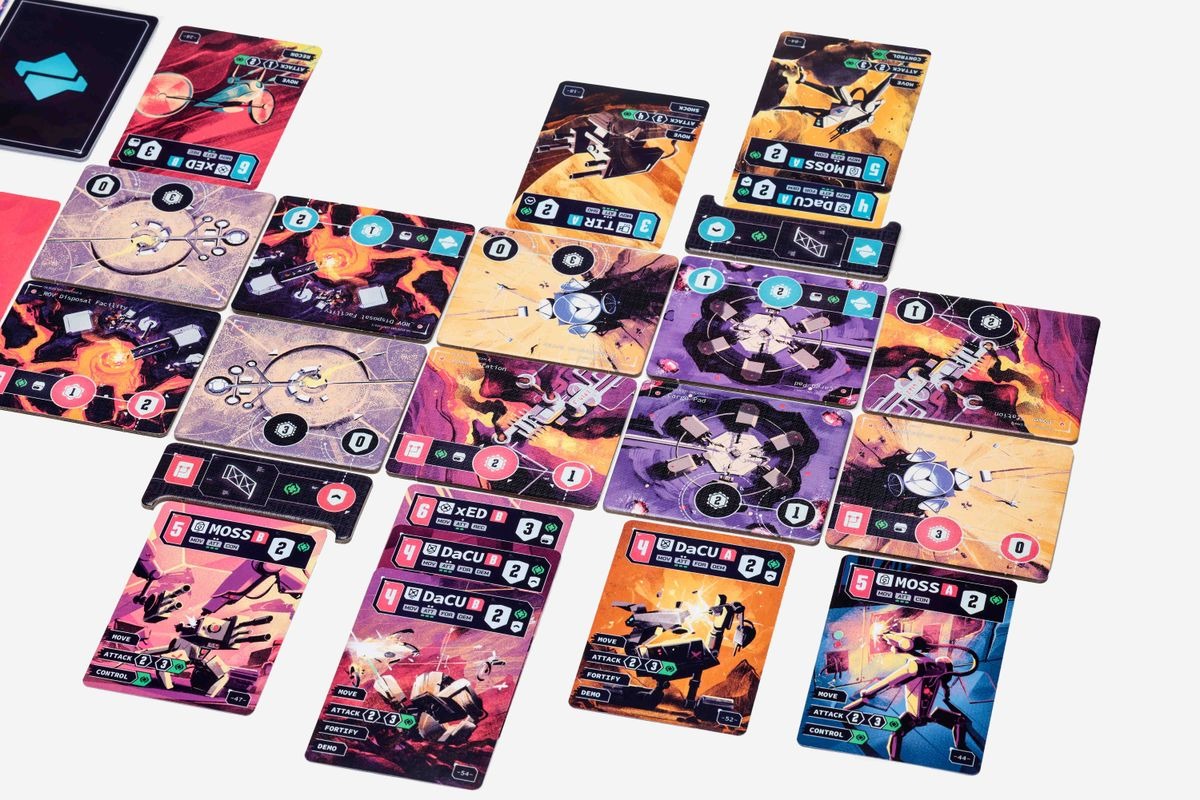
David: Victory is earned by controlling lanes or removing all of one specific type of enemy unit from the board. Each lane has a value between 1-3, and the value is different for each of the players (a lane might have a value of 1 for one player and a value of 3 for the other player). A player needs to reach a total value of 8 across the five lanes, which means controlling three or four lanes. The alternative victory condition is to remove all of your opponent’s MOSS-type units from the board. MOSS units are the core unit in the game, responsible for taking control of the lanes.
Michal: If I am not mistaken, the game will take place in the same “universe” as Undaunted 2200: Callisto. What will be the similarities between both story-wise?
David: Yes, Line of Fire: Burnt Moon takes place in the Undaunted 2200 universe — a few years after the events of Callisto.
In Burnt Moon, POSIWID — a rogue black-hat hacking collective — is attempting to hijack the moon Io and its energy grid. LFA, the Lunar Frontier Authority, is trying to stop them. It’s a proxy war fought through remote-operated robots on a volatile moon.
Michal: The inevitable question all fans of your games – including me – would like to ask: what are David Thompson’s future design plans – both ones which are near publication and those more into the future?
David: Well for 2025, in addition to Line of Fire: Burnt Moon, Osprey is also publishing General Orders: Sengoku Jidai (also co-designed with Trevor Benjamin).
Meanwhile 2026 is shaping up to be an incredible year. Currently announced for 2026 are:
- Rebels Against Rebellion, co-designed with Trevor Benjamin and published by Flying Pig Games
- Night Witches, co-designed with Liz Davidson and published by Fort Circle Games.
- Two expansions for Sniper Elite, co-designed with Roger Tankersley and published by Rebellion Unplugged.
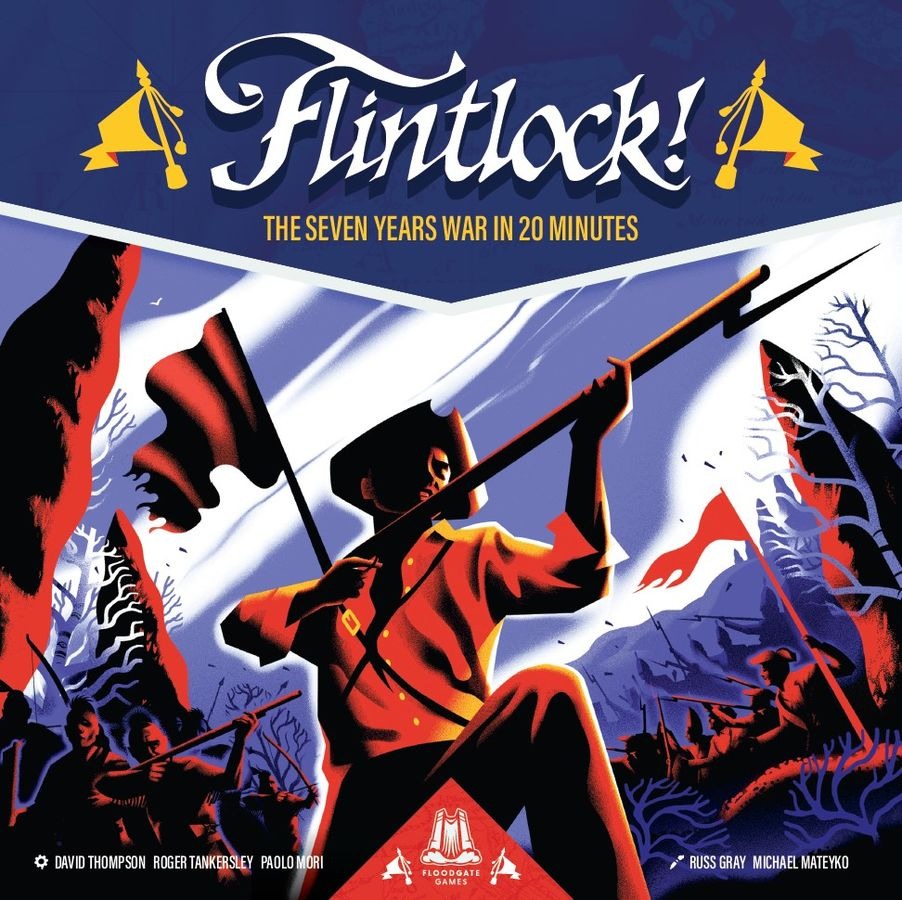
- Flintlock! A game about the Seven Years War and French and Indian War built on Paolo Mori’s Blitzkrieg! game design, co-designed with Roger Tankersley and published by Floodgate Games.
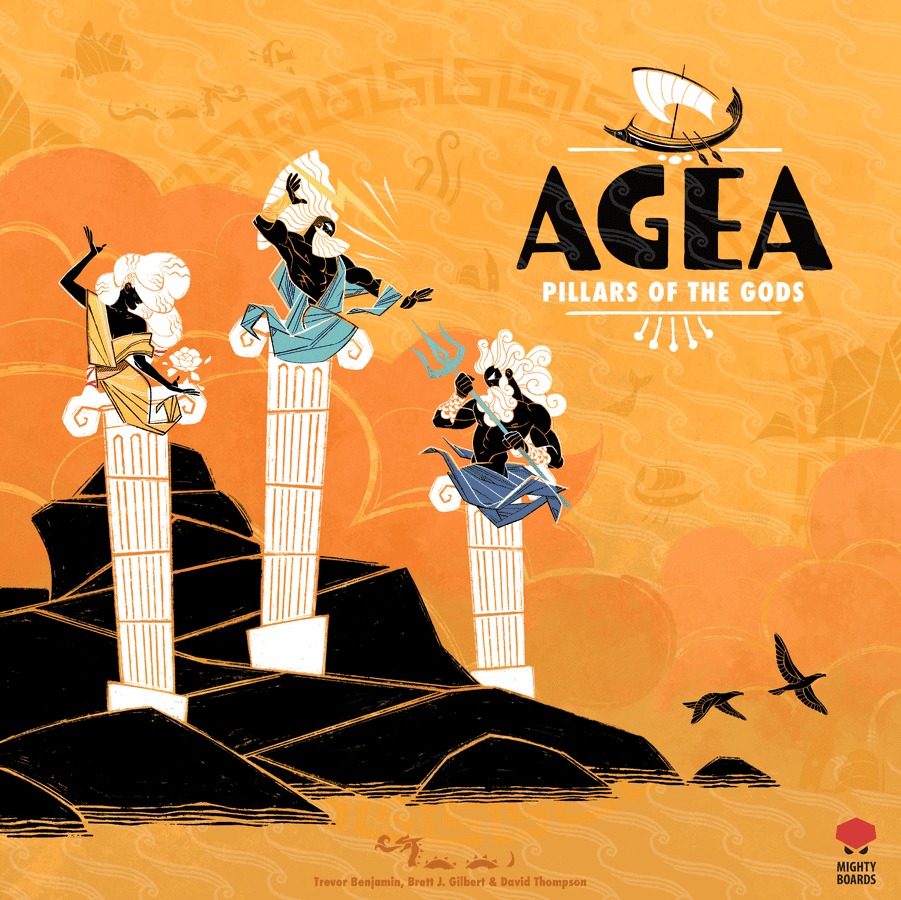
- Agea, co-designed with Trevor Benjamin and Brett J. Gilbert and published by Mighty Boards.
- Zheng He, co-designed with Geoff Engelstein and published by GMT.
- Moytua, co-designed with Trevor Benjamin and published by Bitewing Games.
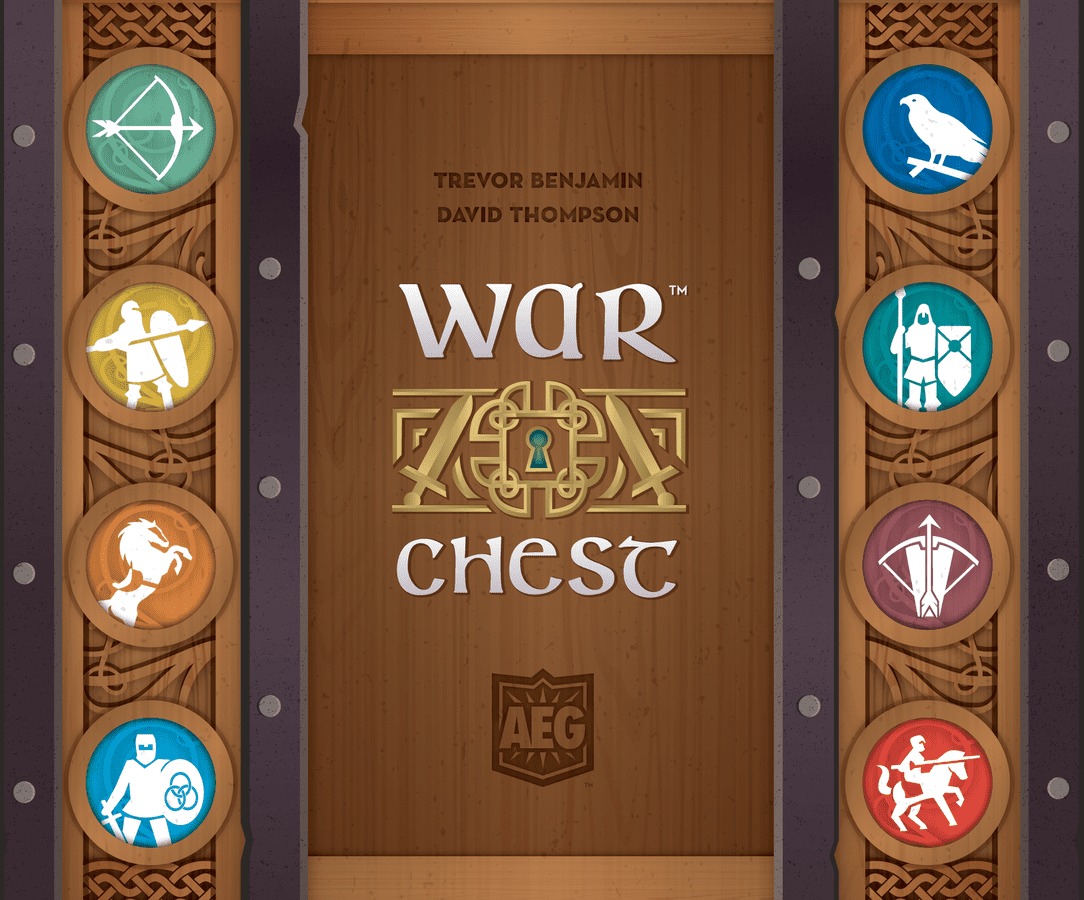
- War Chest: Shock Tactics, co-designed with Trevor Benjamin and published by AEG.
Michal: What a wonderful outlook! Thank you very much for the interview, David! Any last word you would like to add?
David: Thanks again, Michal. Line of Fire: Burnt Moon is a project we’re incredibly proud of. It’s fast, sharp, and tactical — a deck-building lane battler that tells a story with every move. For Undaunted fans, it offers something familiar but fresh. For new players, it’s an easy entry into a universe of tight, strategic gameplay. We can’t wait for people to jump in and start battling on Io.
 The Boardgames Chronicle