
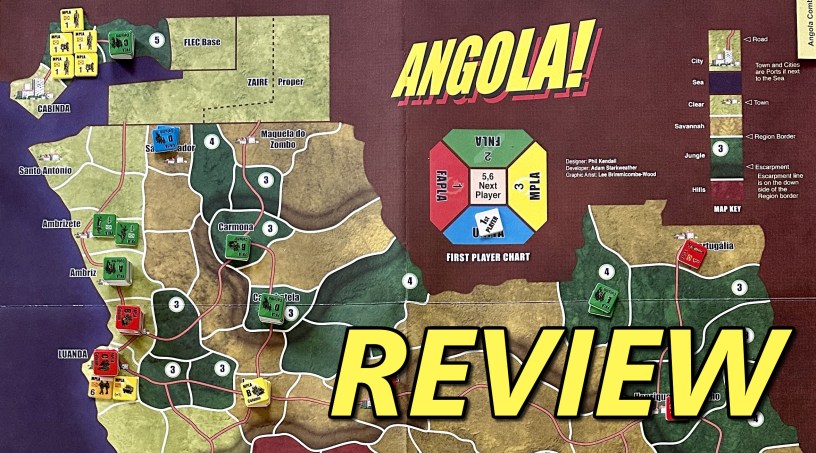
| About game: | Angola recreates a brief portion of the violent, decades-long Angolan civil war that began in the 1970s with the fall of a colonial power and dragged its bloody way into the 21st century thanks in part to Cold War politics. It is a multi-player game in which sides control the various Soviet- and US-backed factions that vied for control of Angola from 1975 to 1976. The game boasts several innovative systems, especially for its release in 1988, that keep players on their toes, create a lot of tension, and reward a balanced approach of boldness and caution. The map is divided into areas, and units represent military formations and special weapons like artillery, rockets, tanks, and airplanes. A unique command and activation system has players secretly committing to the order in which they will activate a limited number of their units for the turn. Players then take turns activating their units in the predetermined order. The result is a tense game of strategy, with players analyzing the map and trying to outguess their opponents. The game is nicely balanced, ensuring that all players constantly feel on the brink of either triumph or defeat. This is achieved through a clever victory point system that rewards strategic play for both sides, allowing players to recover from setbacks and counterattack effectively. So would you stand-up to the task and manage to crush your opponents, gaining the eternal fame and place in history? |
| Number of players: | Both the box and BoardGameGeek says this is a game form two to four players. However, I believe the proper and most exciting way to bring this to the table is definitely in full squad, so with each player running its own faction. Then the game shines as even allied forces might have uncoordinated offensives and some spots might be left undefended. A true chaos of war! |
| Playing time: | In general this is a long game. Very long. 1980’s style long. It can be shortened by manipulating the starting position of victory point track; still, if you would like to play it fully, end to end (10 turns), without automatic victory happening, it will take like at least 8 hours to finish. |
| Complexity: | You see, this is one of those games where rules are not overly complex – I would say, medium-weight. However, the true beauty and countless options come from their application. We have a lot of hidden information here, decisions to make, bluffs to play, which can shake enormously the tactical situation on the map. |
| What I like: |
|
| What I do not like or would like to see in the game: |
|
| For whom? | For all fans of the medium-complexity wargames, who would like to test one of the best classics. For fans of COunter INsurgency games, which like asymmetry, balanced play and hidden information. In essence, every enthusiasts of our hobby should at least once try this great design – to see how fresh the classic game can be. |
| More about the game: |
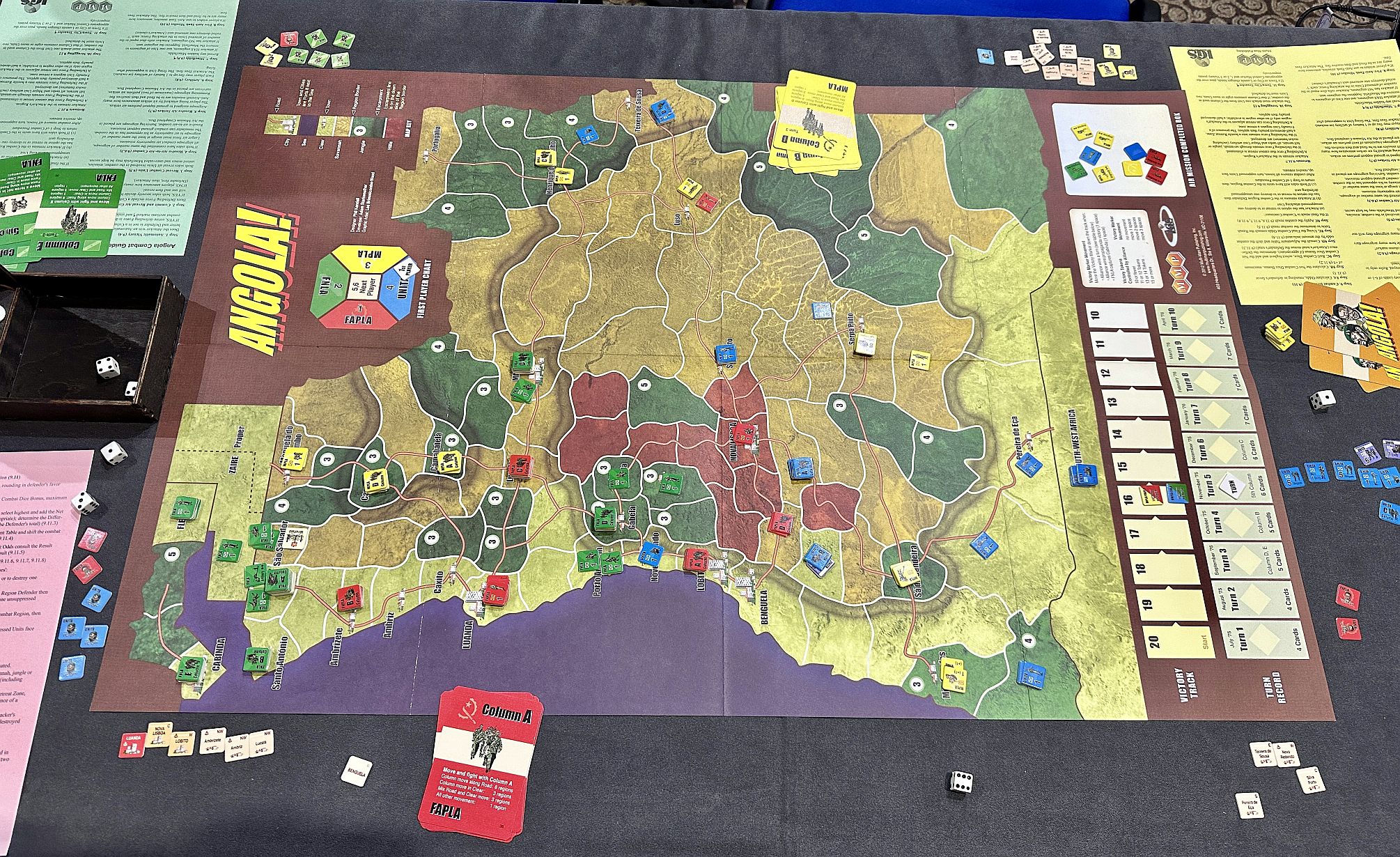
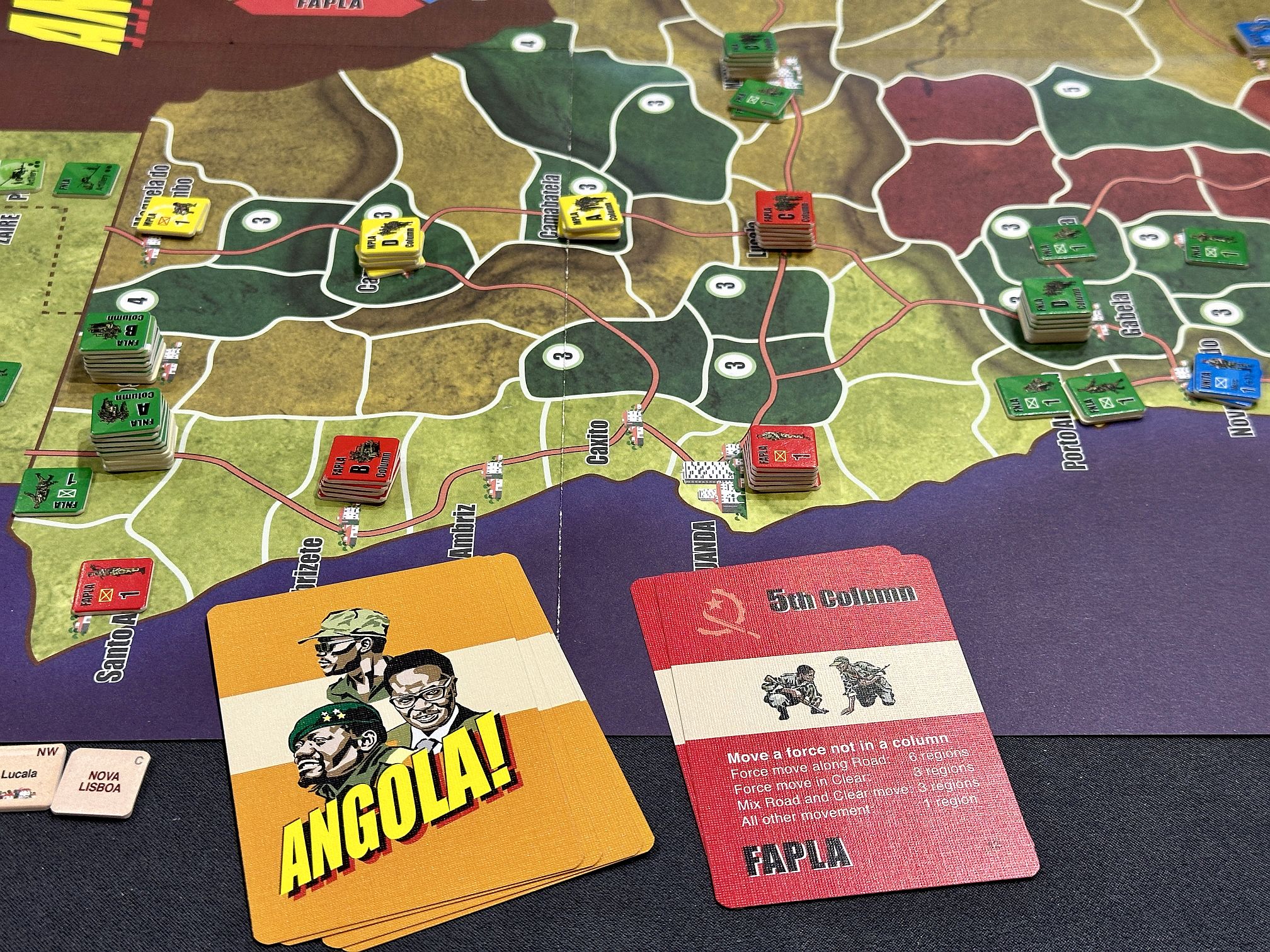
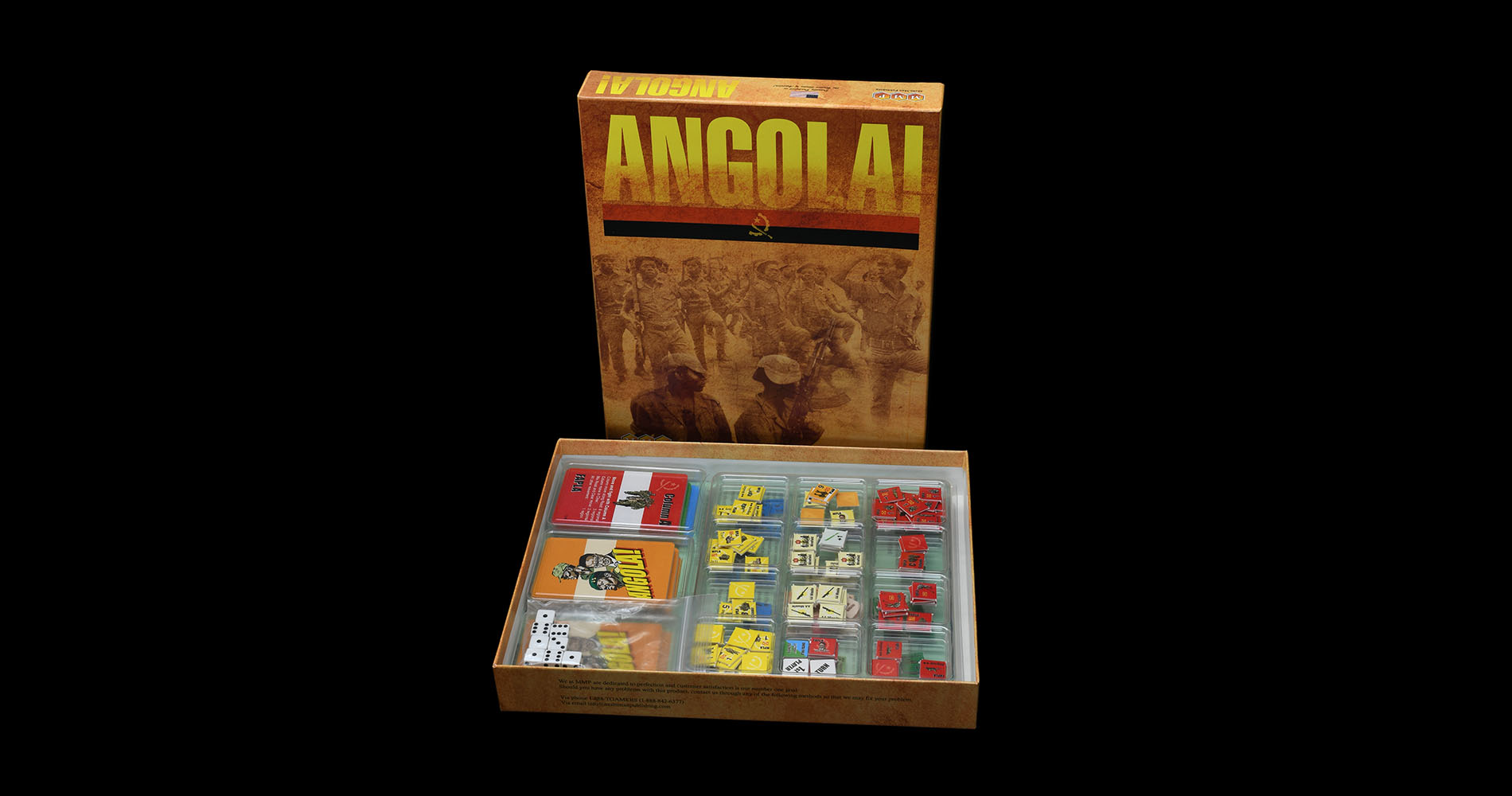
And now let us have a look at materials components pictures of the game:

VERDICT:

When I was starting to play Angola I thought it would be an interesting curiosity, which has already 30 years since its initial publication. So you would think, a deserving classic, a vintage, which looks nice, can be source of curiosity but… does not fit the current times, trends in wargaming industry and is simply out of date.
Nothing could be further from the truth! While indeed a slightly long and sometimes a bit imbalanced game, this is a true source of fantastic mechanics which influenced generations of wargames to come – COunter INsurgency series by Volko Ruhnke just to name a few. It feels tense, keeps players engaged and on the verge of triumph / defeat through most of the play. Really, an astonishing experience. Highly Recommended!
More reviews to come!
 The Boardgames Chronicle

Adore this game. As mould-breaking as We the people.
LikeLike