
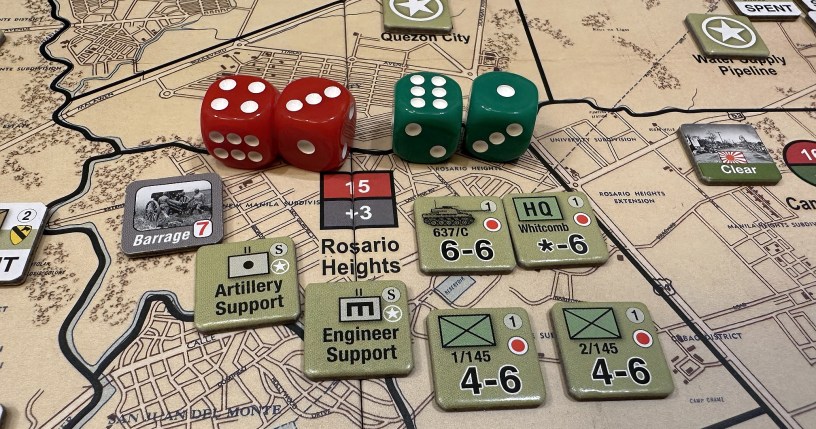
I am always eager to try new solitaire wargame designs. The appetite for this type of boardgames definitely intensified for me during the pandemic times. Still, even today I find it very attractive to try to outsmart the Bots which are preventing my victory on board. I have even my favorite solo titles and favorite solitaire game series.
A year ago I spent many exciting hours playing a new discovery to me – Stalingrad: Advance to the Volga, 1942. This title surprised me with straightforwardness of its rules as well as with the depth – and replayability – of its actual play. So it was pretty obvious that I will try to get also its sequel.
About the game
Manila: The Savage Streets, 1945 is a game by Michael Rinella, published from Revolution Games/Take Aim Designs. It puts the player in charge of the attacking and far more mobile American side while the game system handles the defending and largely static Japanese forces. Each turn presents new and unique challenges for the player in the form of random events, uncertain supply deliveries, and unknown Japanese area strengths and defensive strategies.
The primary game is a nine-turn campaign covering the American assault on the city during February and March 1945. The deeper American forces advance, from the city’s less developed periphery to its urban business district and fortress-like government buildings, the greater Japanese resistance becomes. The number of American units fought to exhaustion, effectively out of action, mounts.
The game has very quick set-up which is different each time you play; there are several optional rules that can really spice-up the game – but also, most probably, make it more challenging. And what is important for wargamer who loves history, there is a lot of background information!
Example Session report
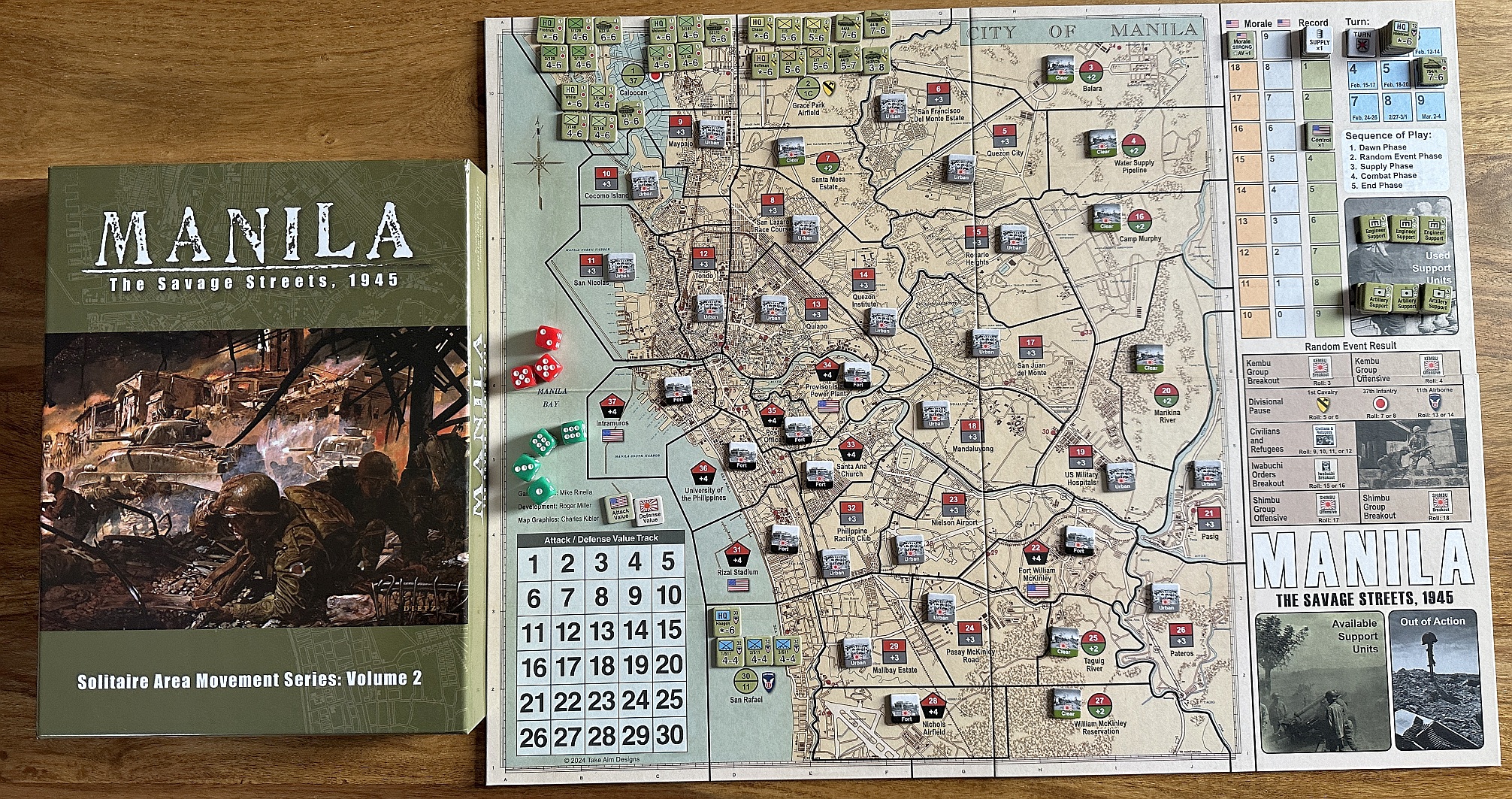
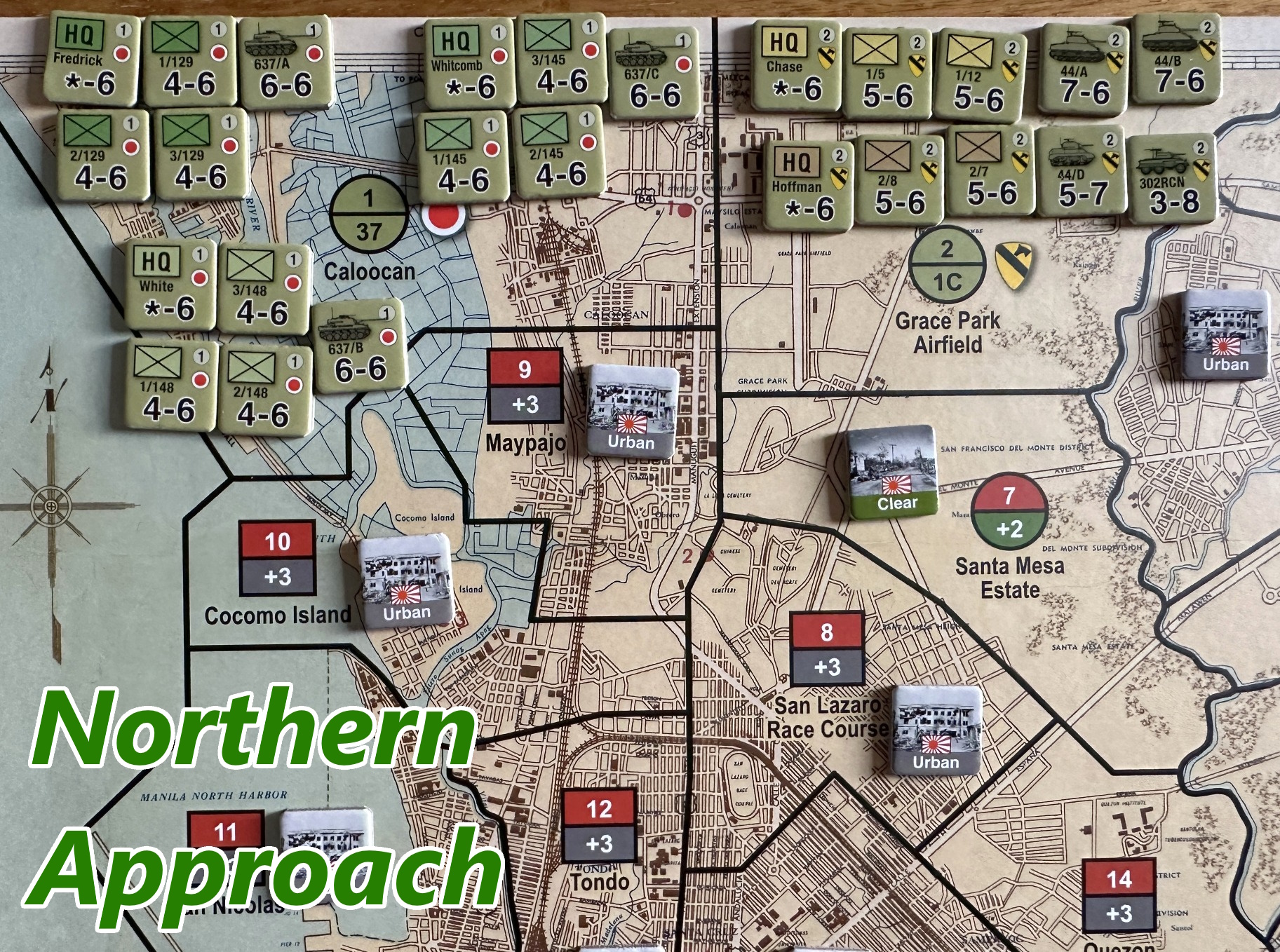
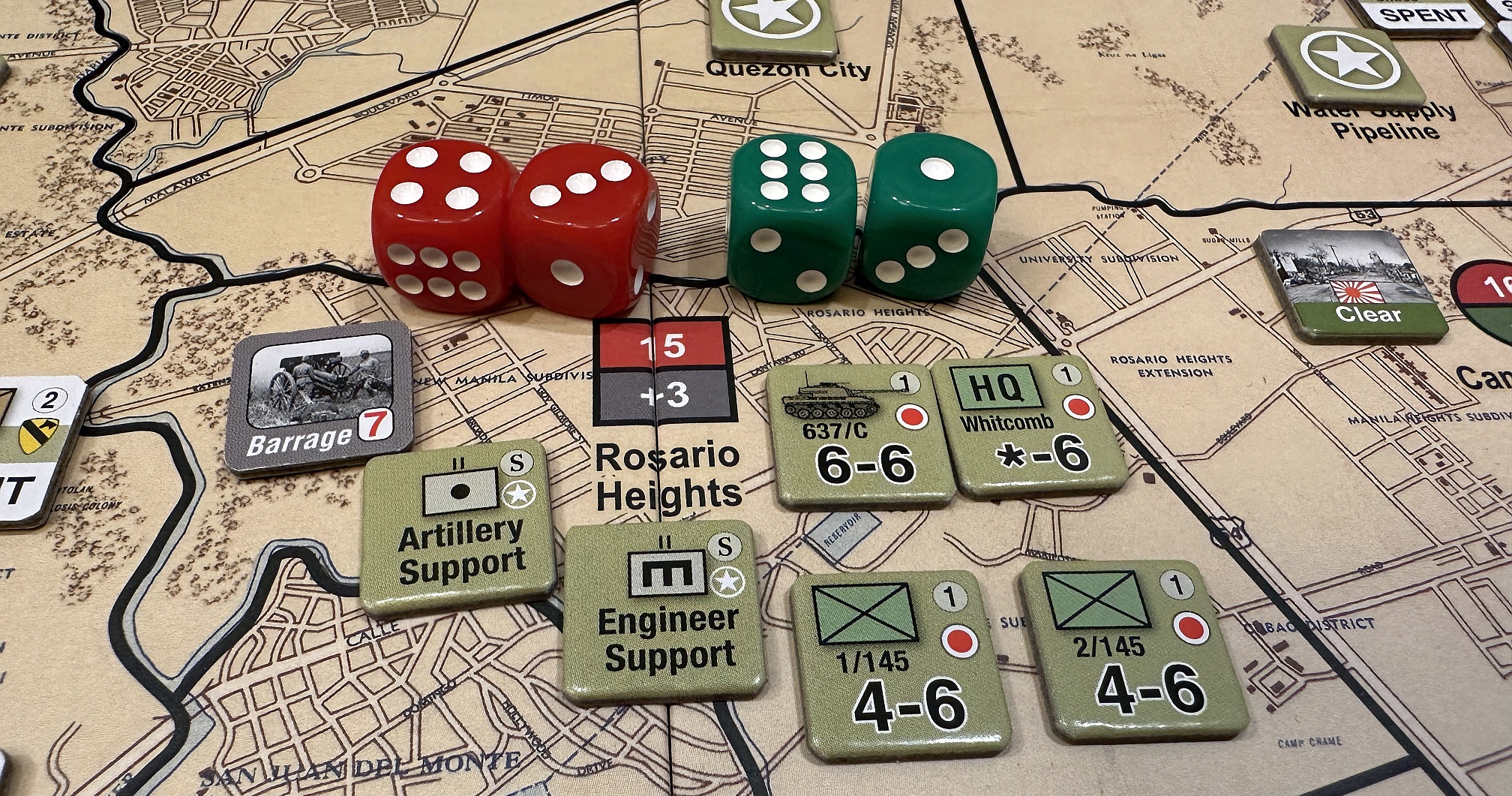
One of the most effective ways to get acquainted with the game is to play it multiple times in a quick succession. This approach allows you to immediately apply the insights gained from previous sessions to the new ones. Before writing this article, I did exactly that and now, using one of these attempts as an example, I would like to share more details about the game with you. Additionally, showcasing its beautiful components is another reason for this picture-rich session report!
Historical Background: Manila, “the Pearl of the Orient,” had been occupied by the Japanese Empire in January 1942. With a population of 800,000, the city was one of the largest in Southeast Asia. In late 1941, Manila was declared an open city by the retreating Americans to spare it from destruction. Now, three years later, American General Douglas MacArthur had returned to the Philippines, intent on liberating the city. Before the war he had lived in the Manila Hotel (Area 37).
Automatic Victory: The American player wins an Automatic Victory if at the end of any Combat Phase every Area on the map is American controlled. On the other hand, if American Morale is “0” at the end of any Combat Phase, the game ends in an Automatic Victory for the Japanese side.
Operational Victory: If Automatic Victory has not been achieved by the start of the End Phase of Turn 9, the game’s final turn, the American player wins an Operational Victory if they control Intramuros (Area 37) and the “American Control” markers on the Record Track total 34 or greater. That was historical result.
PS. Feel free to click any of below images to expand them in new window for more details.

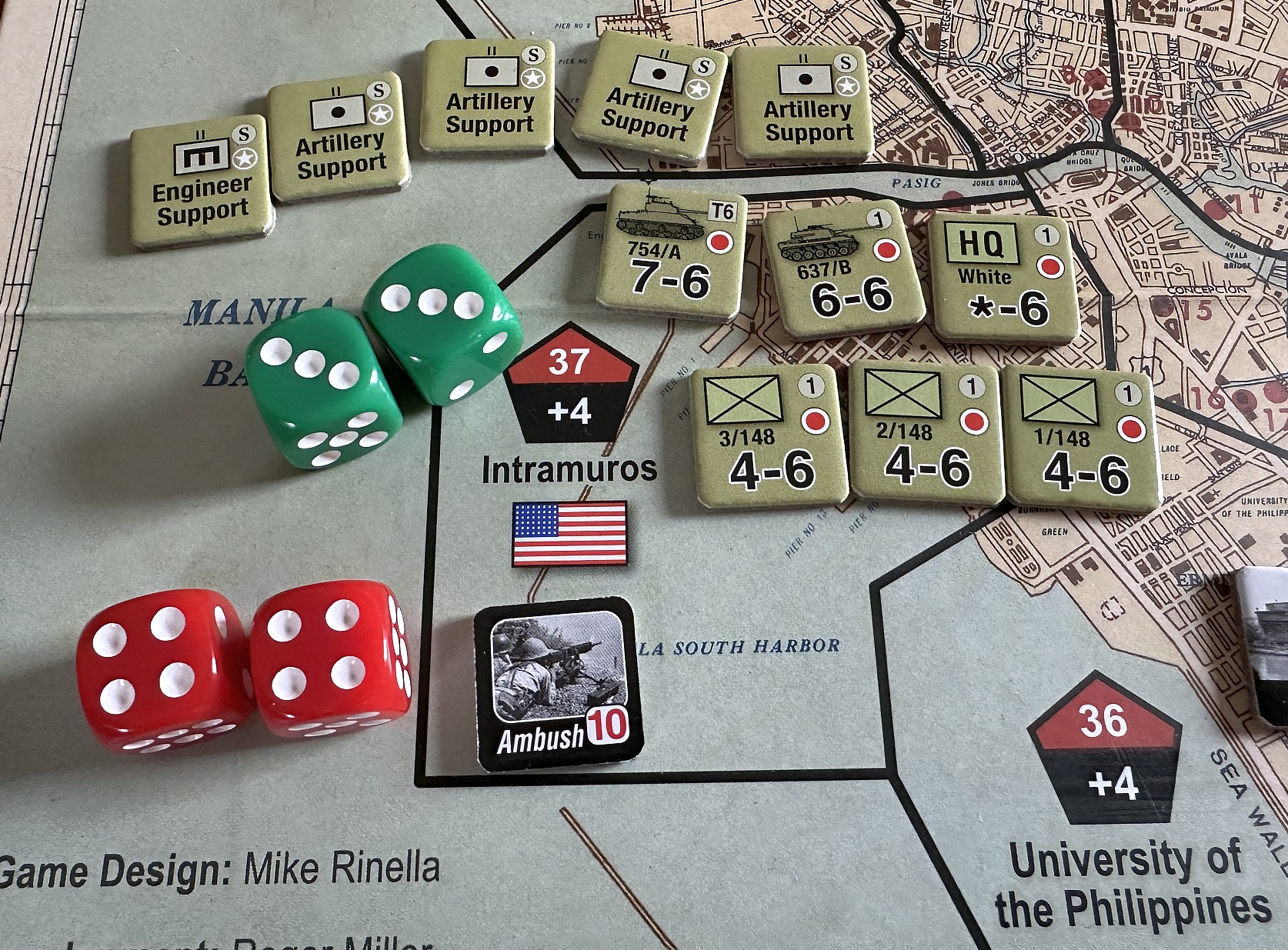
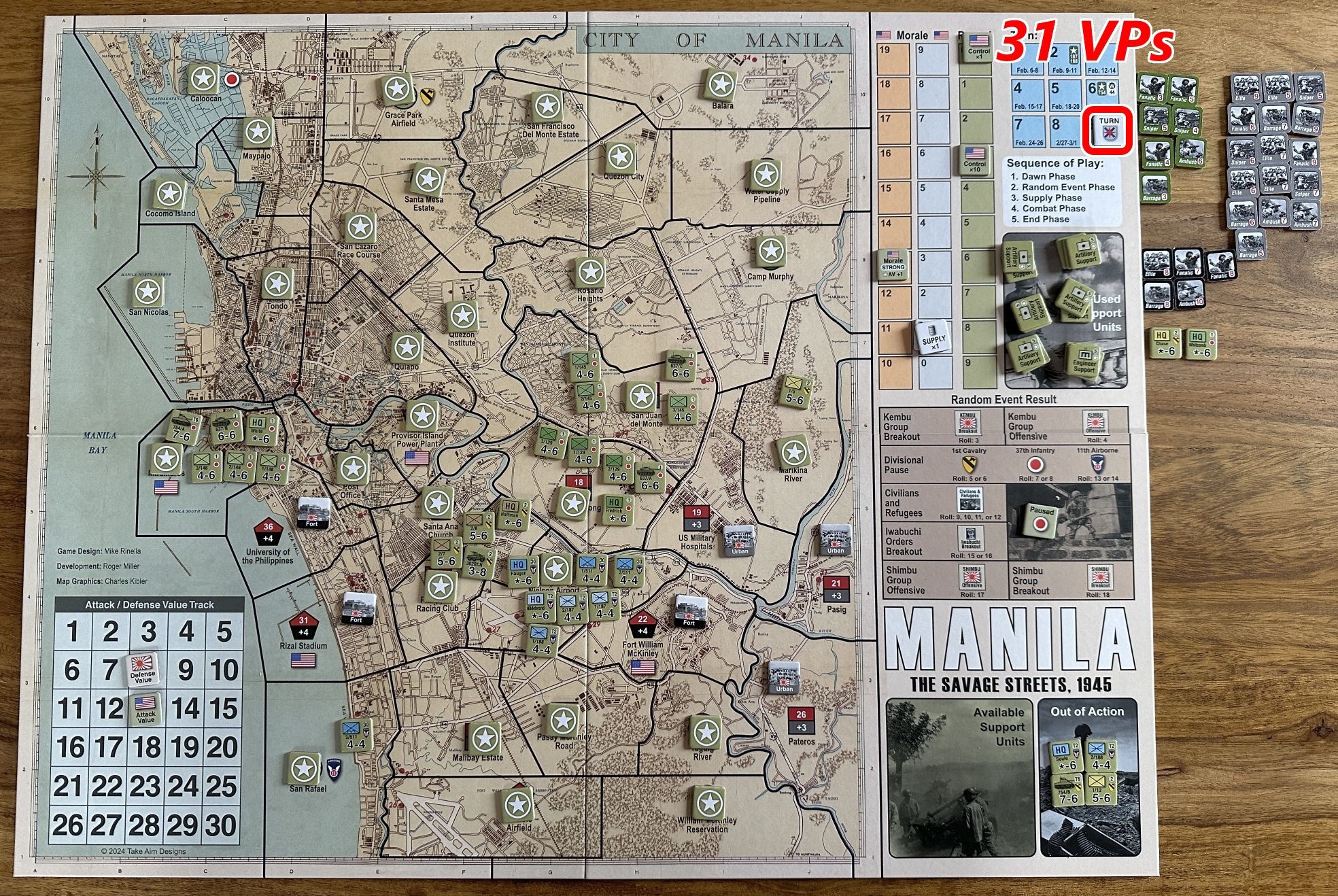
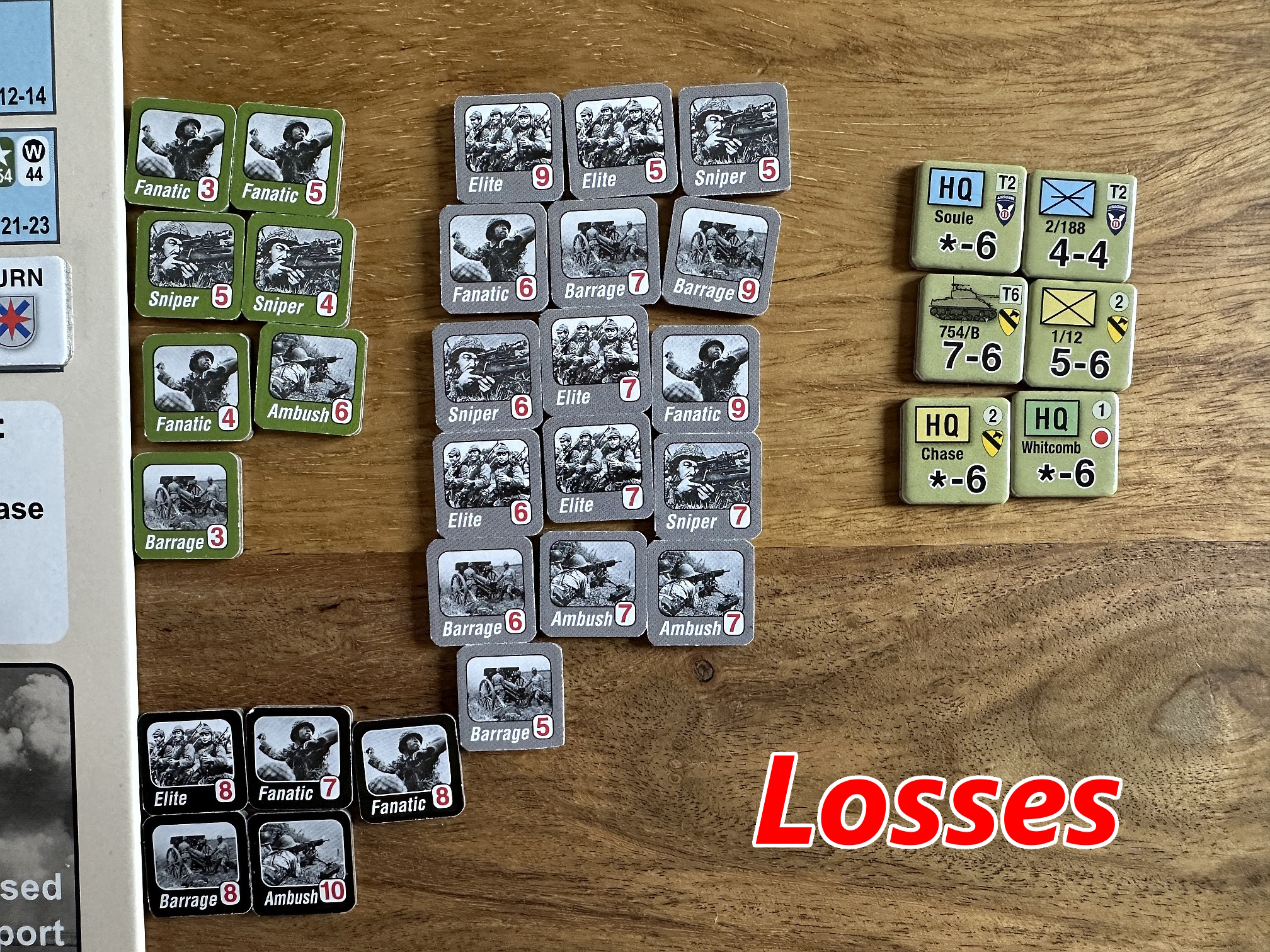
First Impressions
After several sessions, time now to share my impressions regarding this title. Let us talk about details:
- I want challenging AI in my solitaire games. Only then I have the inner urge to try and try to beat the opponent – you know, the syndrome of one more attempt. I believe I am getting exactly this in Manila – despite Japanese forces being mostly static, they really form-up a formidable opponent.
- If you have comparison to Stalingrad and played that prequel, you will see that this static approach of defenders is a bit lifted. You might be surprised by sudden counter-attack by some elements of the Japanese defense!
- We have here multiple Optional Rules, which predominantly increase the difficulty / make game more realistic. Also, those allows for some types of units / weapons (like Engineers) to play much more key part in the game.
- What also strikes me positively is the the Components Quality. The board stylized on the map from WWII, the beautiful, detailed tokens, the glossy rulebook or even neat dice set. Really great impression from esthetical perspective.
- Limiting the randomness factor – yes, you roll a lot of dice; but you have supplies and tools (Artillery, Engineers, Airplanes, saving supplies from turn to turn) to make sure that you achieve success where you really need it. It is more a question of priorities where to spend them then just counting on luck.
- In Stalingrad we had two scenarios – which was of course historically justifiable. In Manila we are down to only one – it is a pity, as the more set-ups and ways to play the game you have, the longer you can draw the fun from it.
- I have some concerns regarding the game Replayability – this is true that the opponents are distributed randomly within the particular terrain type and it changes from the game to game; you may encounter completely different type of resistance each time and in the end you decide how much resources to commit. Still, it seems a bit repetitive to start at the same point and usually, follow similar avenues of approach. That already mentioned second scenario would help much here.
Overall, the game made a pretty positive impression on me and I simply liked it. That was a well designed and developed sequel to Stalingrad, which brought a lot of fun as well as sometimes frustration at not being able to crack particularly well positioned defense. Highly recommended and the next installment in the series is soon to come.
 The Boardgames Chronicle