

Recently I started to discover more and more games from the small French publisher – Nuts! Publishing. What characterizes those titles is attention to detail and graphical representation. Simply speaking, those games are astonishingly beautiful. You might heard, saw or even played some of their positions like 300: Earth & Water or Port Arthur.
While attending the Spiel Essen fair I also visited Nuts! booth and had a chat with the crew. I was mainly interested in the new installments in Combat Rations series – so what will come after 300 and Port Arthur. Believe me, plans are great! However, while there I spotted and interestingly-looking, exploration-type game which really caught my attention. What was it? Diluvium! Let us talk today about this title.
About the Game
So what is Diluvium (Flood from Latin) about? Well, as the leader of a powerful civilization, you must explore and settle the islands available to you, with the goal of gaining the most gold possible. Escaping the great flooding as one of ancient civilizations – Aztecs, Egyptians, Greeks or Chinese – you will have four classical actions to choose from during your turn:
- explore
- settle
- produce
- engage
The game is advertised as 4X (EXplore, EXpand, EXploit and EXterminate) title which can be played in 60 minutes. Indeed, this is true and it is up to players to dictate the tempo of the session as the game ends as soon as any one of the resource pools is exhausted. Who will be then the winner? The civilization with the most Gold in their reserves will gain that title.
Another feature to stress is that the multiplayer game offers symmetric and asymmetric ways of playing. What is more, we are getting also a full, dedicated solo campaign where we would need to travel through four different scenarios, outcome of which will dictate the next adventure and its starting conditions.
Session Reports
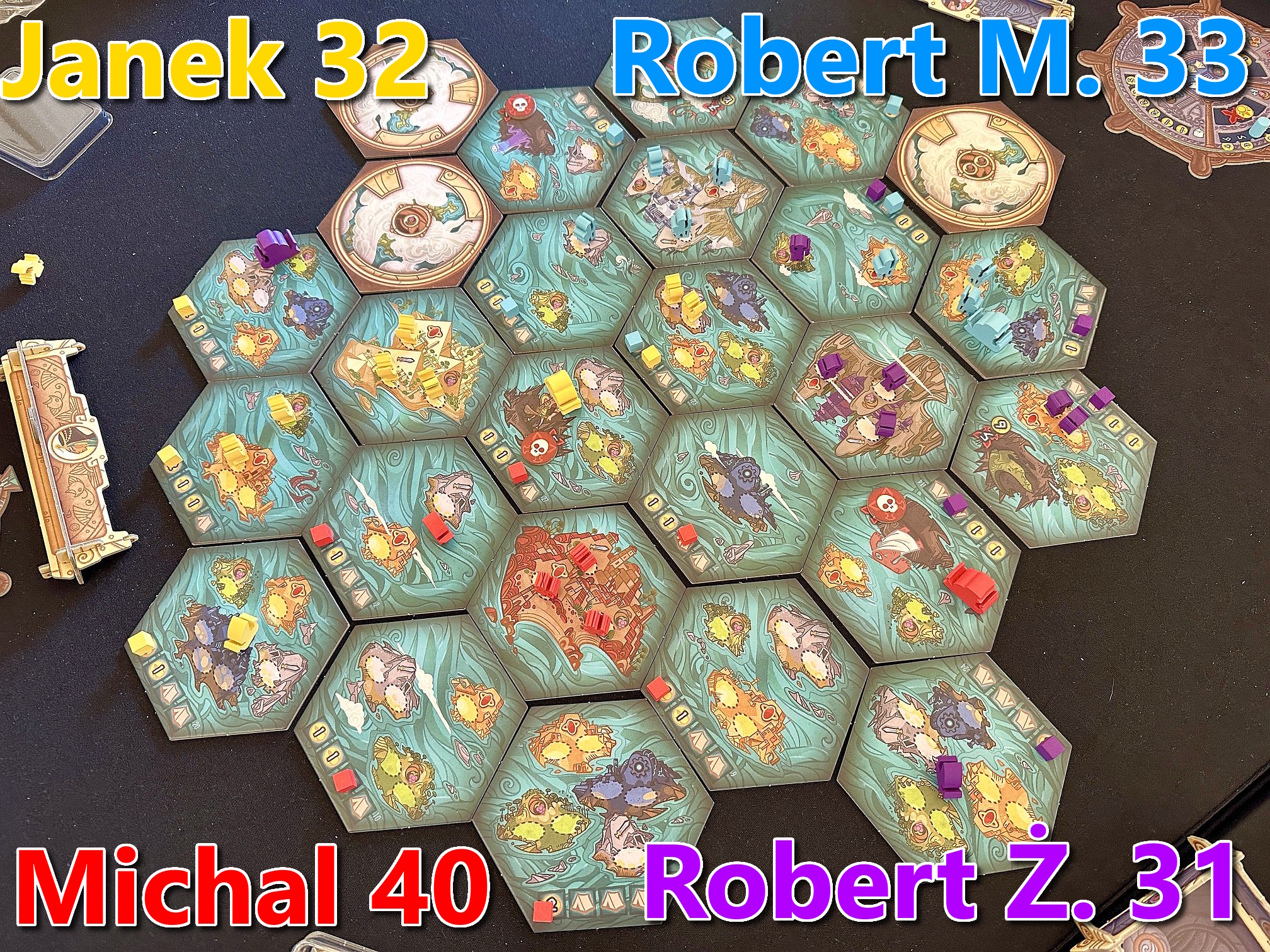
What is the best way to start sharing the impressions about the game? Definitely by showing the actual plays and session reports which can explain the game flow and give the feeling what it is all about. So far I played this title six times – both multiplayer and solo – and I believe I have a good understanding of its mechanics, what I like and what could be problematic.
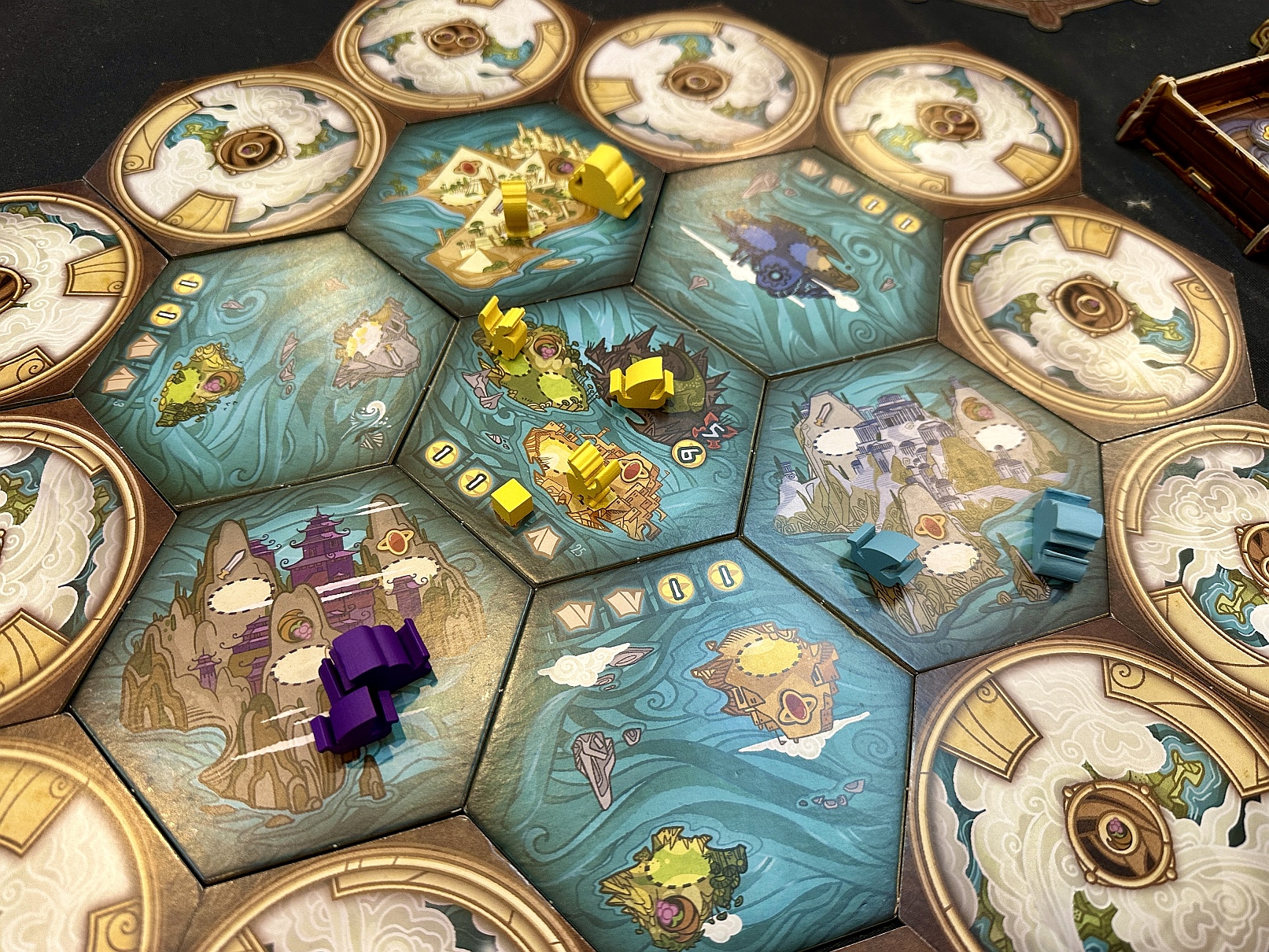

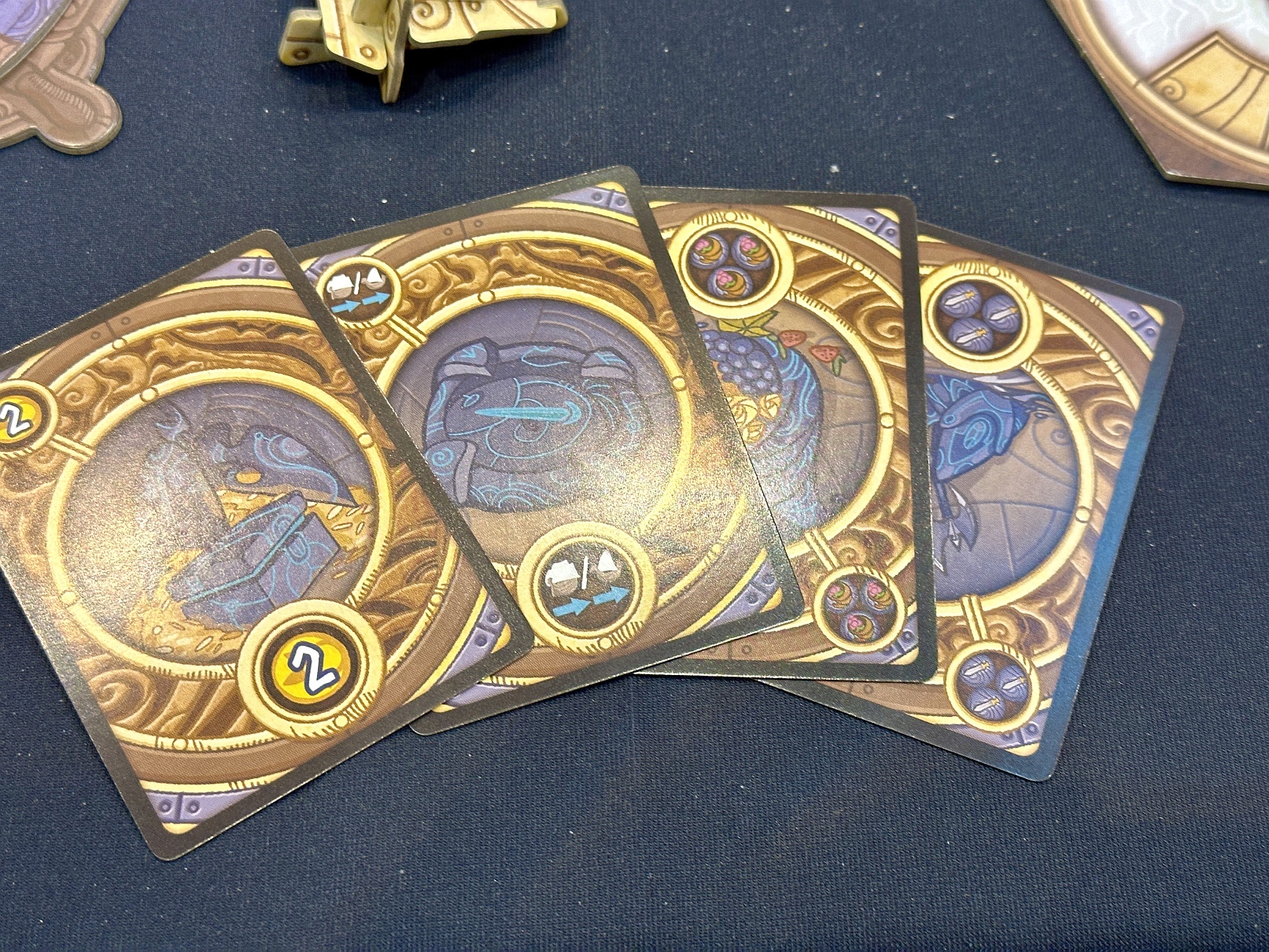
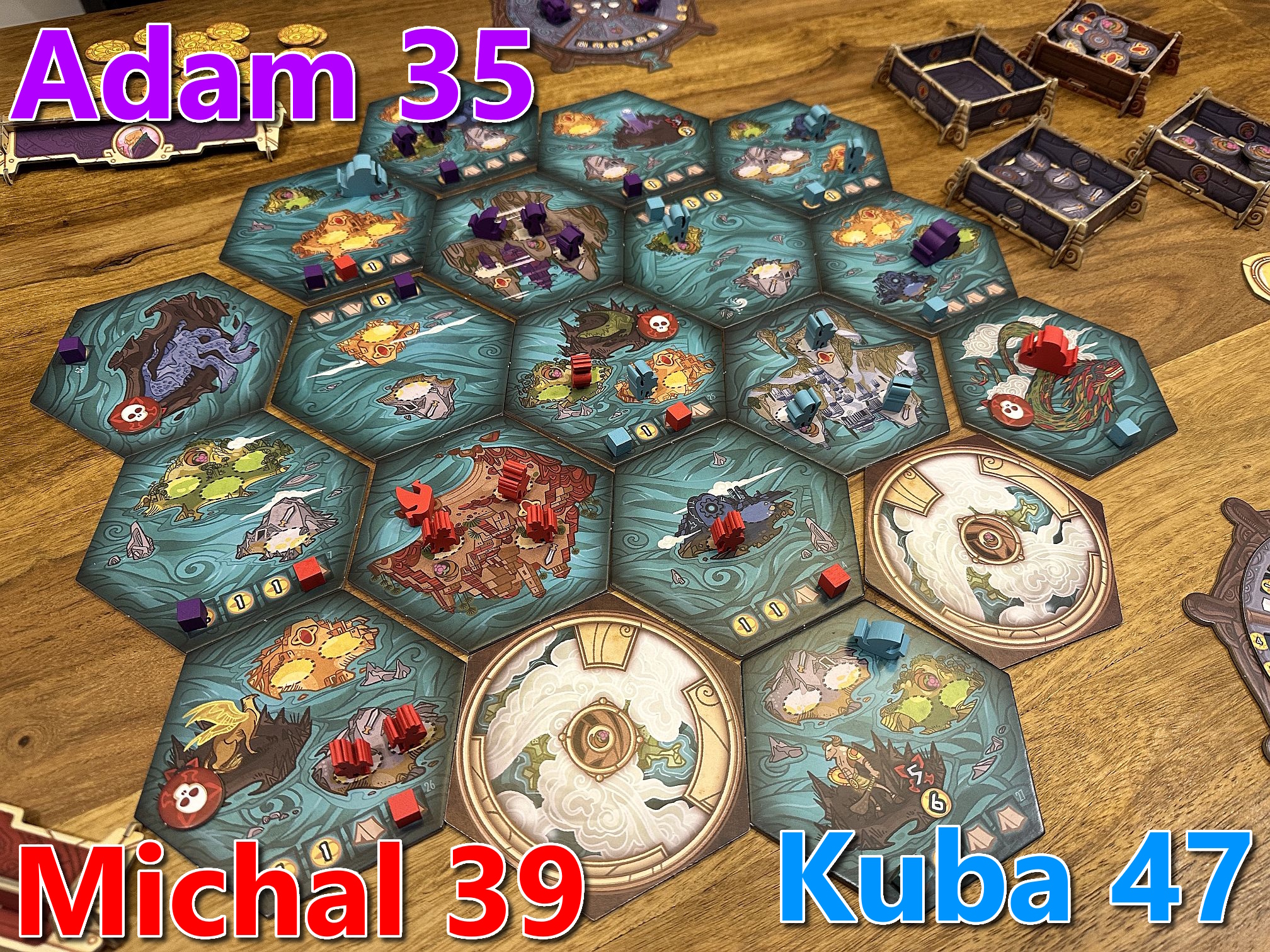
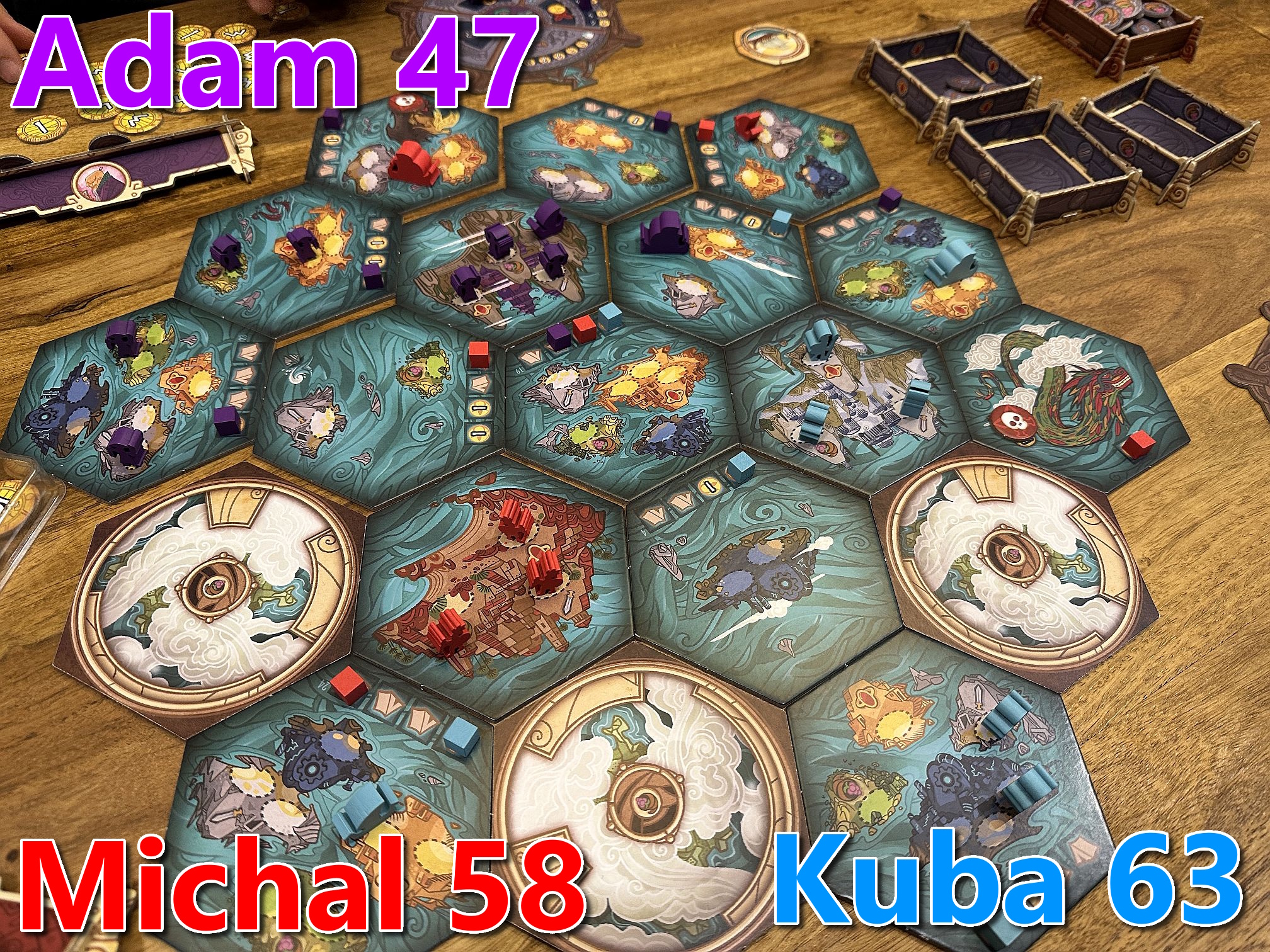
First Impressions
That was a real fun playing Diluvium. What we took from the plays are the following impressions:
- This is a very small, straightforward and easy to explain exploration and conflict game. It will take no more than 7-10 minutes to familiarize other players with the rules and 15 minutes / per player for actual session. These are not approximations – this is real data from my actual plays.
- The pace of the game is regulated by the players. The more you use / produce of particular resource, the quicker it will finish.
- The components are astonishingly beautiful – wooden pieces, beautiful map tiles and convex player mats – it all makes for a very nice experience.
- There are small twists to make the game enjoyable and prolong fun from it – asymmetric backs of the base game player mats; small bonuses to actions once you settle all the workers; hidden information regarding the resources and battle resolution; discovery of tiles where you can encounter monsters!
- I would like to stress how well the solo campaign is incorporated. This is not and addition to the game but key component to it, very well designed and prepared.
- Now, I am wondering about replayability of this game. After six plays I believe I know everything I could about multiplayer version. Solo campaign is still to be finished and I will definitely do it. But would I keep it after that? Not sure.
- Also, the game might feel a bit simplistic – however, I am not sure if this is a drawback or advantage. This is entry position to the world of conflict games and if treated like this, plays its role.
To sum up, I enjoyed this small, neat game very much. It is beautiful, engaging, allows both for peaceful and violent development and is fantastic price to performance (about 40 Euro). Definitely you should try it!
 The Boardgames Chronicle