
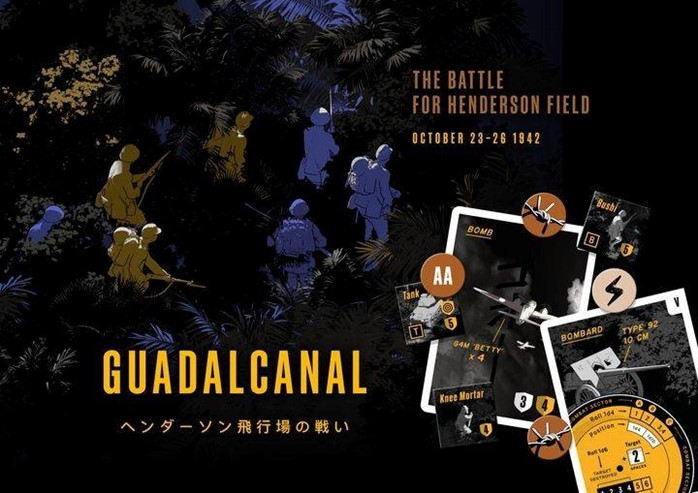
To immediately jump to the Kickstarter Campaign page of the game go here:
Michal: Nice to meet you Vincent! Please tell us a little about yourself. What do you do for a living, what games do you play? Also, what is your role in the design and publication of the game?
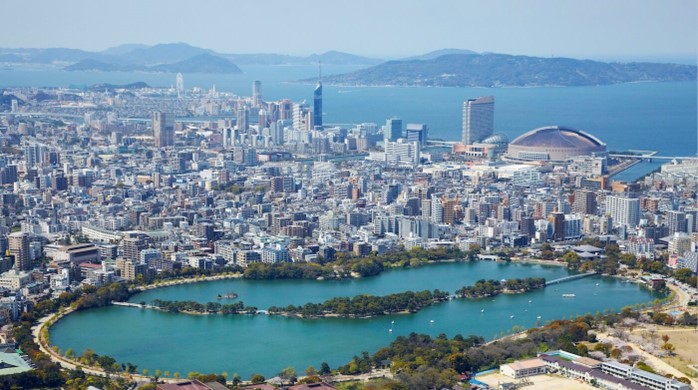
Vincent: Nice to meet you mate 😊 😊 I live in Fukuoka, Japan. Fukuoka is famous for being the gateway through which a lot of Chinse culture entered Japan, via Korea. Green tea was introduced here and the first Zen temple was built here. It is also the site of the two failed Mongol invasions in the 13th century, which gave rise to the now infamous ‘Kamikaze’ (Divine Wind) phrase, though originally it described a major typhoon that destroyed the Mongol/Korean/Chinese fleet.
I have been in Japan for over 25 years now. I have trained to a high level in martial arts, and karate in particular, since my teens and have a deep interest in the relationship between Zen Buddhism and art forms such as karate, but also the tea ceremony and other ‘Zen arts’.
I teach English a couple of evenings a week and on the weekends I am a wedding conductor. The rest of the time nowadays I spend working on game designs. I am striving to become a successful, semi-professional game designer!! 😊
In my free time I still train in karate, but also enjoy cycling and hiking. I love the hot spring culture in Japan so I like to visit a hot spring whenever I have the chance. I also love watching live sports and having a drink. 😊

Most of my actual gaming nowadays prioritizes my own play testing. This requires a lot of thought and a lot of experimentation and takes a surprisingly large amount of time. Right now, I am playing Stilicho, a classic solitaire game. I also play a lot of games like Nemesis and Black Rose Wars with my friends.

Michal: Guadalcanal: The Battle for Henderson Field continues great Valiant Defense series, initiated by David Thompson. What inspired this title, which will for the first time take the series to the Pacific Theater?
Vincent: The inspiration goes all the way back to the first time I played Pavlov’s House. One of the aspects of that game that really caught my attention was the way David Thompson had turned the supply of Pavlov’s House into a game within a game. For anyone unfamiliar, different Supply tokens must be not only transported across the Volga, but also protected from the Luftwaffe. I thought this was part of the genius of the game and I quickly formulated a couple of ideas that I thought would work well with this kind of model. Both ideas however were for battles of a much larger scale AND they weren’t WW2 AND they didn’t involve US forces.
After approaching DVG and then David with my ideas it was agreed that I would have permission to design a Valiant Defense game but the subject needed to be revised. Living in Japan and being an enthusiastic amateur historian of the Pacific War, Guadalcanal didn’t quite fit perfectly, but it was close enough that we could agree on that topic for a game. Although supply is a key point of the game, the Supply Tokens used in Guadalcanal are generic rather than the specific ones found in Pavlov’s House. This was the minor difference. So, a Supply Token in Guadalcanal can represent ammunition, or quality nutrition (for pilots) or medical supplies and so on, but there are no individual Ammunition Tokens or Nutrition Tokens or Medical Supplies Tokens.
Guadalcanal also challenges the player to take command of Henderson Field, another Pavlov’s influence, mirroring the Operational control aspect. The player takes control of the 1st Marine Division HQ, Division Intelligence and Task Force 62, as well as the 11th Marine Artillery Regiment and the 3rd Defense Battalion. He also commands the famous Cactus Air Force, utilizing Wildcat F4F, SBD – Bomber and SBD – Patrol aircraft to repel attacking bombers and complete crucial missions vital to the defense of Henderson Field and victory in the overall Guadalcanal campaign. This was a big inspiration as it offers the player so much more control and decision-heavy game play.
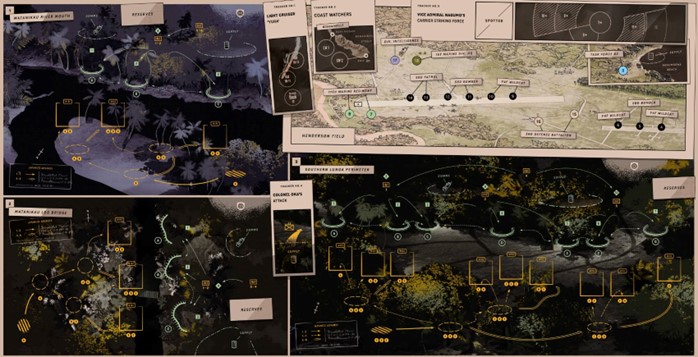
Michal: What are the key components of the game? It seems that wonderful graphics of Nils Johansson are for good with the series.
Vincent: That’s what we are hoping for!! Along with the game board, there are some very attractive counters representing the USMC and IJA forces. Many actions are determined by USMC Operational cards and IJA cards. Guadalcanal – The Battle for Henderson Field also introduces Difficulty Levels and a wide variety of Variant play options.
Michal: Can you elaborate a little about the game mechanics? If possible, can you point out some new design choices for veterans of Valiant Defense series?
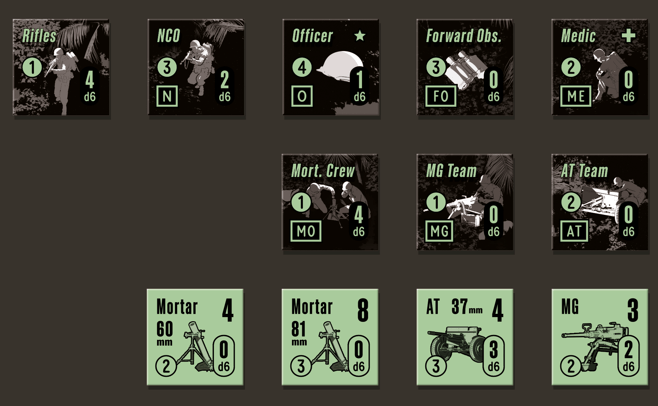
Vincent: The core mechanics and concept remain the same: The player is defending a fixed position against an attacking enemy advancing along Attack Tracks, with the actions of that enemy determined by drawing and resolving cards which in turn affect the counters on the game board. Everything will be familiar. For USMC counters you roll a number of d6 die determined by the Attack Value of the counter. If one or more of those results is equal to or greater than the Defense Value of the target IJA counter, that counter is destroyed and removed from the game board.
Different counters have different abilities, for both the USMC and IJA. For example, the 37mm Anti-tank Gun is able to use direct fire against the Tanks advancing at the Matanikau River Mouth, but it can also generate Suppression Tokens to use as anti-personnel weapons against Infantry (the 37mm AT Gun could also fire cannister shells).
The Medic does not have an Attack Value but does have the First Aid ability and can save a USMC counter in an adjacent Combat Position from being destroyed. Doing so requires a Supply Token.
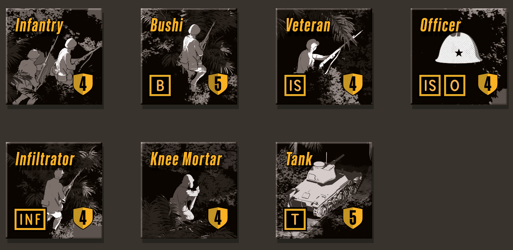
For the Imperial Japanese Army, the Bushi counter is possessed by Yamato Damashii (Japanese Spirit) and gains a saving throw anytime it is hit, with the chances of survival increasing at the Attack Wave number increases.
The Infiltrator is a unique counter. In Pavlov’s House when the defensive line is penetrated, the game ends in defeat, and that is almost always true in Guadalcanal. The exception is the Infiltrator. After crossing into the USMC firing line, the Infiltrator destroys a counter in a rear Combat Position or the Reserves box. There is no safe place!!!
One of the biggest developments is the use of Event cards. These affect the entire game and are based on historical events that either did happen or could have happened. For example, one card assumes the Japanese Navy were successful in the Battle of Savo Island and managed to inflict heavy losses on Task Force 62, which in turn limit supplies landed ashore throughout the game.
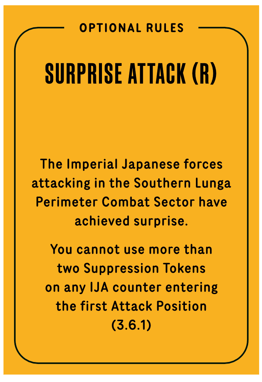
Another example might be Surprise Attack. This is a Regular Difficult Level Event card (R). Historically, the 17th Army was unable to surprise the Marine defenders, but this card assumes surprise. As such, it is assumed the defenders do not have enough time to react to the attack and cannot bring heavy weapons to bear, reflected in the limited number of Suppression Tokens that can be used.
Michal: How do players determine victory in Guadalcanal: The Battle for Henderson Field?
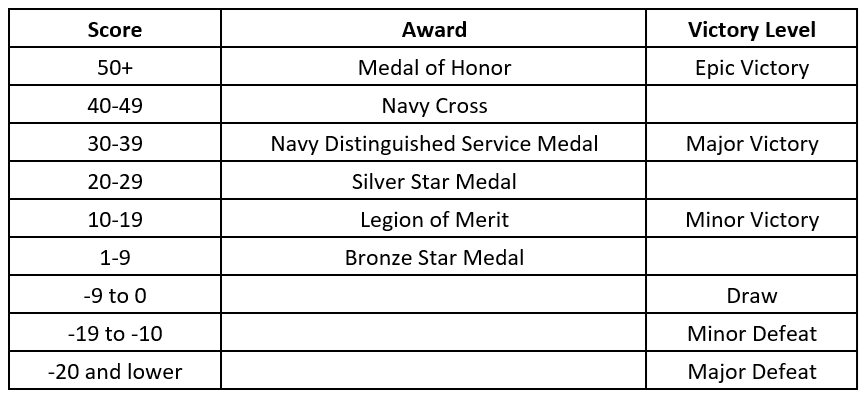
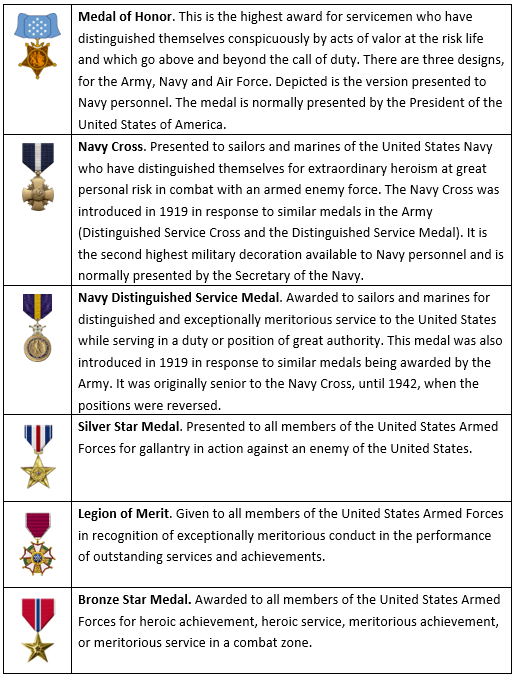
Vincent: First of all, the player must protect Henderson Field! The player must prevent any IJA counters breaching the USMC firing line, must protect 1st Marine Division HQ at Henderson Field and must ensure he always has forces on the board. If any of those conditions are not met, the game ends immediately in defeat. By eliminating attackers and completing critical missions (Dive bombing the light cruiser Yura, locating Admiral Nagumo’s carrier fleet, defeating Colonel Oka’s final attack and activating Coast Watchers to gain Intelligence) the player accumulates Victory Points. The more Victory Points the higher the medal earned! 😊 This allows players to measure their progress in skill development. It also allows for a points comparison if playing competitively with another person. Each player tries to beat the score of their opponent.
Michal: The number of players for this title on the BoardGameGeek stipulates one to three players. That is a huge novelty – would you be so kind as to explain?
Vincent: Well, I simultaneously don’t want to either overstate or understate the multiple player options.
This is not a fully fledged 2-player or 3-player game. It is very much a solitaire game.
That said, the competitive play option allows the second player much more scope to interact with the game and his opponent and get involved in making decisions.
Perhaps a fair way of describing it is that the competitive play option means the USMC player is playing the solitaire game he is familiar with, while the IJA player is playing a variant of the game he is familiar with (assuming he has also played Guadalcanal and knows the rules).
The key differences are:
- There is a Variant deck option and the game – if the Stretch Goal is funded (I am sure it will be) – will include additional IJA cards. These serve primarily to prevent the solitaire player being able to ‘read’ the deck as he draws familiar cards. In the competitive play option, these Variant cards allow the IJA player to design his own deck to battle with. 😊
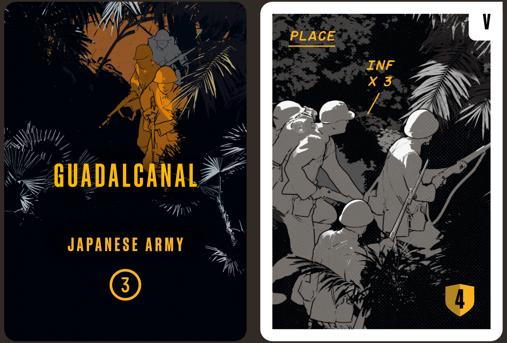
The ‘V’ in the example indicates a Variant IJA card.
- In the solitaire game three IJA cards are drawn each turn in the IJA Card and Counter Phase and resolved as they are drawn (as is familiar in a VD game). The competitive variant allows the IJA player to draw 4 cards (from the deck he has designed!!), choose three of those cards and then choose to resolve them in any order.
- Another Variant is the use of Event cards. In the solitaire version these are usually drawn randomly and impact the duration of the game. Another alternative is to select a scenario which provides a theme around which the Event cards are based. In the competitive variant we encourage the IJA player to be able to determine which three Event cards he will use (which in many cases are further affected by each card’s individual Difficulty Level).
So, in summary, if the IJA player is using all three options detailed above, he has a great deal of control over how the IJA will perform. The counters still move along the same Attack Tracks and normal rules otherwise apply, but this option allows for far more player agency than we have seen in previous VD games.
The three-player option repeats the competitive variant but puts one player in charge of Henderson Field (thereby resolving the USMC Card Phase) and a second player in charge of the defense of the perimeter (thereby resolving the USMC Counter Phase). These two players are then battling against the third player controlling the Japanese attackers (resolving the IJA Card and Counter Phase).
Michal: You probably know Vincent that I am a great fan of the series and 100% sold on this title; still, for those new to this genre, as for Guadalcanal: The Battle for Henderson Field itself, what makes this game unique?
Vincent: The Valiant Defense series is itself unique and really pushes the ‘States of Siege’ type of game to a new level. Elements are familiar, most notably the use of Tracks along which the attackers move, but the scope of player interaction (that is, interaction with the game) and decision making is far wider than other States of Siege games that I have played (not that I don’t like them 😊 ). Where Guadalcanal REALLY shines is adding the Operational element found in Pavlov’s House. Pavlov’s is the most popular VD game, and my fave solitaire game of all time!
The player is not only defending against IJA counters moving along Attack Tracks, but is also using the Cactus Air Force to complete missions, landing and distributing supplies from Task Force 62, setting up Comms between Division Intelligence and the Combat Sectors, readying the artillery of the 11th Marine Regiment and using the 3rd Defense Battalion to shoot down Betty bombers flying in from Rabaul. The different types of aircraft available (Wildcat F4F, SBD – Bomber and SBD – Patrol) each have a unique role to play in the game.
Michal: How are you going to publish the game and where the players interested in the project can get more information?
Vincent: Guadalcanal – The Battle for Henderson Field will go to Kickstarter on July 30, 2024. There is a Valiant Defense group on Facebook, which I encourage anyone interested in the game to join for frequent updates.
Michal: What are the future plans for you? Any new designs / games in preparation?
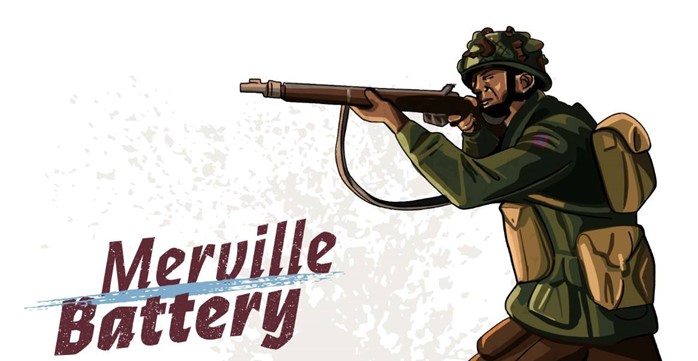
Vincent: There are a lot of games in various stages of development. Immediately following Guadalcanal – hopefully by the end of the year – Merville Battery will go to Kickstarter. This covers the attack by the British 9th Parachute Battalion against the Merville Battery, which could fire on Sword beach on D-Day if not neutralized. Almost everything that could go wrong did go wrong, but the Paras still managed to put the guns out of action for at least long enough for the soldiers going ashore to not have to deal with any bombardment.
Other games coming next year are PT Boat Leader and the first expansion for Field Commander Robert E. Lee, which will cover the Mule Shoe / Bloody Angle, part of the Battle of Spotsylvania.
I am also working on my first ‘wargame books’, similar to those made popular by Mike Lambo. There are three games being play tested now, one covering a famous aspect of a famous battle in the American Civil War, another covering a Victoria Cross action in WW1 and the third is related to Task Force Ranger and Mogadishu.
Beyond that, FC Caesar is in early development, and a game covering the Battle for France in 1940 is being sketched out. 😊
Michal: Vincent, thank you very much for extensive and insightful interview. Keeping fingers crossed for the campaign!
 The Boardgames Chronicle